About Salamandrina terdigitata (Bonnaterre, 1789)
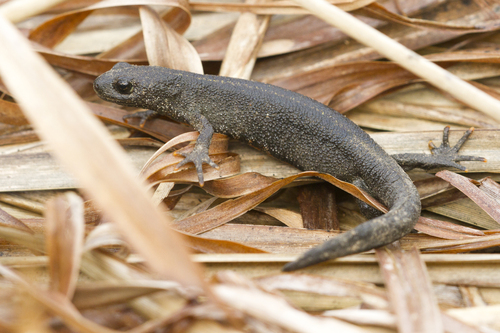
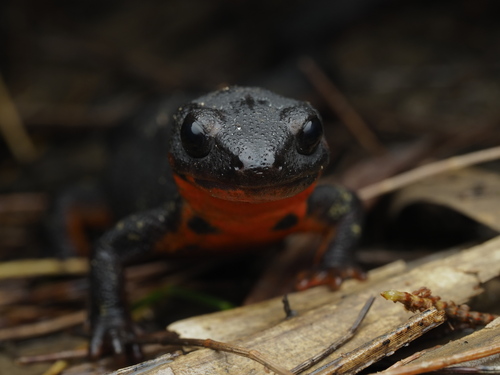
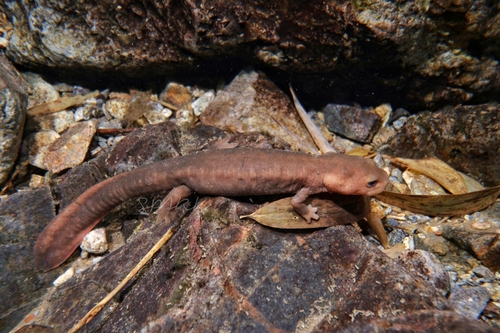
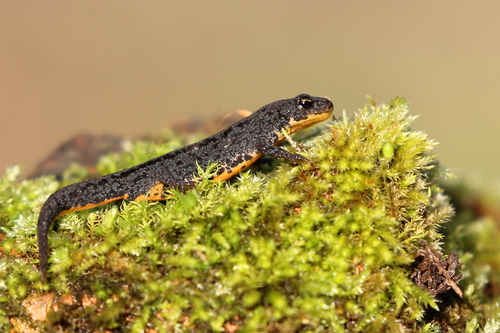
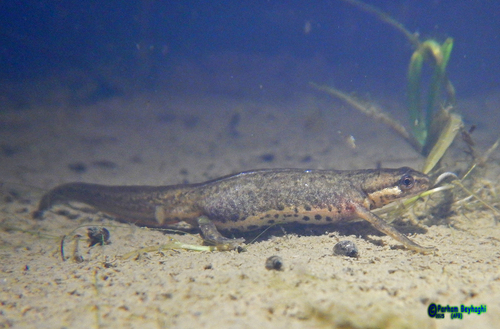
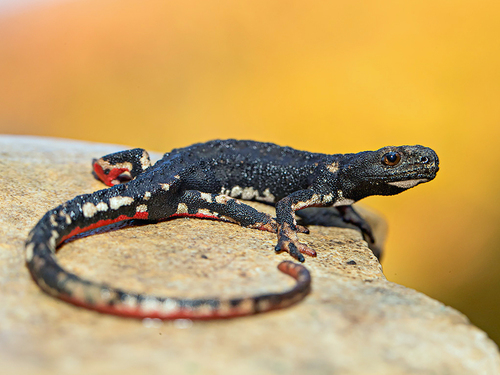
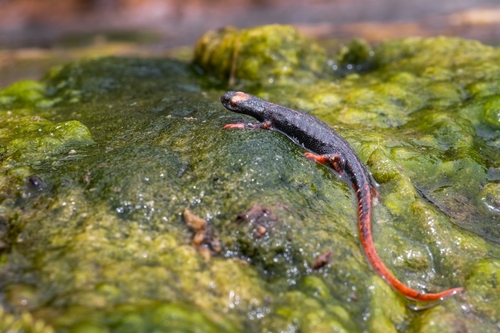
The spectacled salamander, scientifically named Salamandrina terdigitata (Bonnaterre, 1789), is a species of salamander in the family Salamandridae. This species is found exclusively in the southern Apennine Range of Italy, where it inhabits humid valleys and shady, overgrown hillsides at altitudes between 200 and 1,200 meters. To the north, its range borders the range of its sister species, S. perspicillata. S. terdigitata is considered an important indicator species for environmental health. Unlike most other salamanders and newts that have five toes on their hind feet, this species has four toes. It has a warty, brownish-black back, with a ribbed texture on its flanks, and a creamy white V-shaped marking between its eyes. The underside of the salamander is covered in black and white markings, while the underside of its legs and tail are pinkish-red. Spectacled salamanders are most often found near streams, in dense vegetation, or sheltered under leaf litter, dead wood, or stones. They are nocturnal and terrestrial. When threatened, this salamander performs unkenreflex by raising its tail and legs, displaying its red underside to deter predators. Similar aposematic warning displays are seen in newts, the Apennine yellow-bellied toad, and the spotted salamander. Mating for the spectacled salamander occurs on land during spring. Females lay clutches containing roughly 30 to 50 eggs, and the larvae take 2 to 3 months to fully develop. Female spectacled salamanders only enter water to lay eggs; after completing metamorphosis, adult males avoid water entirely. The IUCN Red List follows research published by Mattoccia et al. (2005) and Canestrelli et al. (2006) which classifies Salamandrina perspicillata as a separate species from S. terdigitata.