About Salamandrella keyserlingii Dybowski, 1870
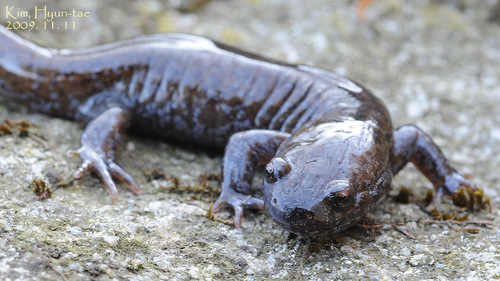
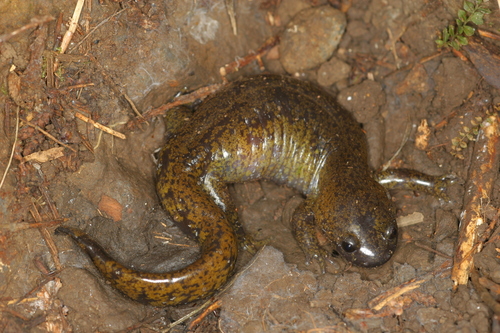
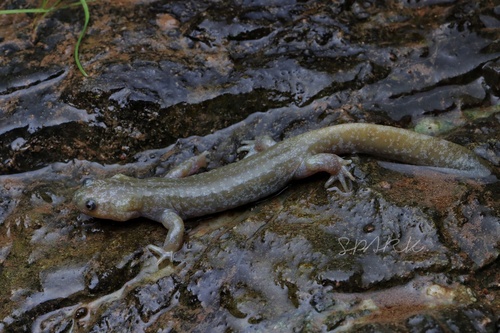
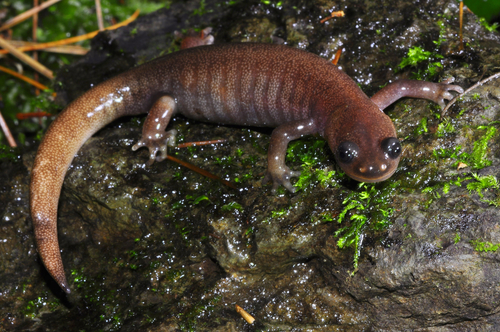
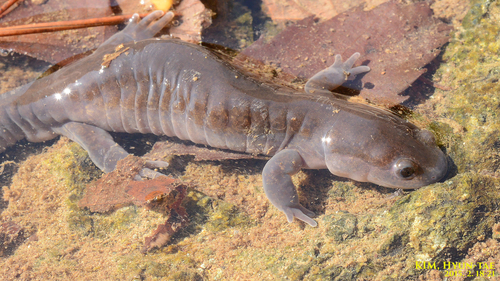
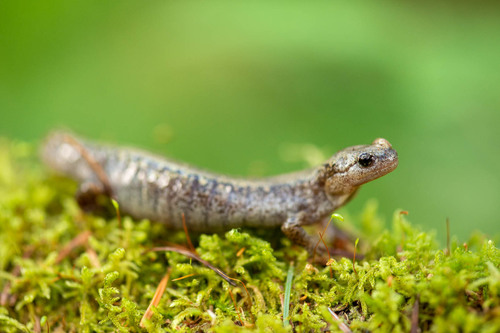
Adult individuals of Salamandrella keyserlingii measure between 9.0 and 12.5 cm in total length. Their base body color is bluish-brown, marked by a purple stripe running along the back. Thin dark brown stripes appear between and around the eyes, and sometimes also appear on the tail. Each foot has four clawless toes, and the tail is longer than the body. On average, males are smaller than females of the species. This salamander is well known for its ability to survive deep freezes at temperatures as low as −50 °C. It achieves this cold tolerance by losing one quarter of its body weight through water loss, undergoing liver shrinkage, and increasing the concentration of glycerol throughout its body. The species is primarily distributed across Siberia east of the Sosva River and the Ural Mountains, extending through the East Siberian Mountains (including the Verkhoyansk Range) northeast to the Anadyr Highlands, east to the Kamchatka Peninsula, and south into Manchuria. Isolated outlying populations also occur in northern Kazakhstan, Mongolia, northeastern China, and the Korean Peninsula. It is currently believed to be extirpated from South Korea. One isolated population lives on Hokkaidō, Japan, within Kushiro Shitsugen National Park. A Siberian salamander breeding ground located in Paegam, South Hamgyong, is designated as North Korean natural monument #360. Across its large range, this species occupies habitats including wet conifer forests, mixed deciduous forests in the taiga, and riparian groves in tundra and forest steppe. Individuals are found near ephemeral or permanent pools, wetlands, sedge meadows, and oxbow lakes. Its breeding season takes place in May or early June, when breeding occurs in pools of standing water. A single egg sac holds an average of 50 to 80 eggs, and a single female can lay up to 240 total eggs in one breeding season. The light-brown eggs hatch three to four weeks after being laid, producing larval salamanders that are 11 to 12 mm in length at hatching.