About Sakesphorus cristatus (Wied-Neuwied, 1831)
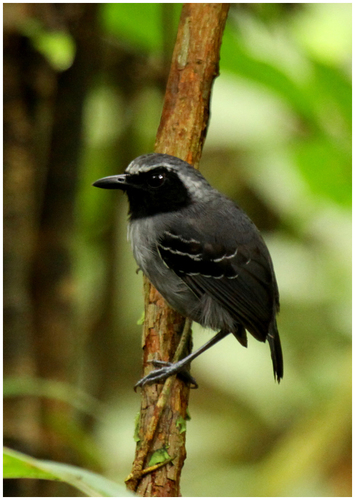
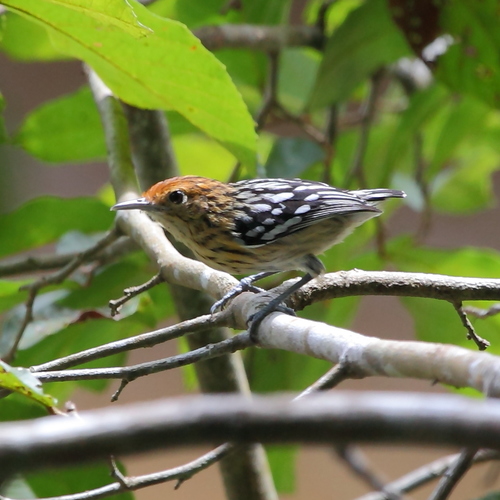
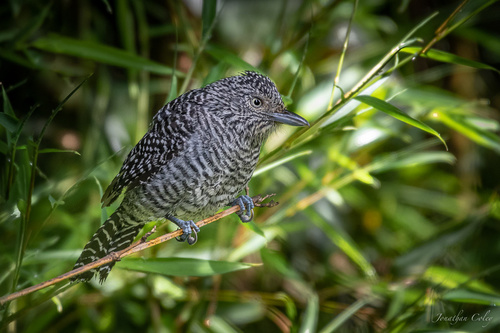
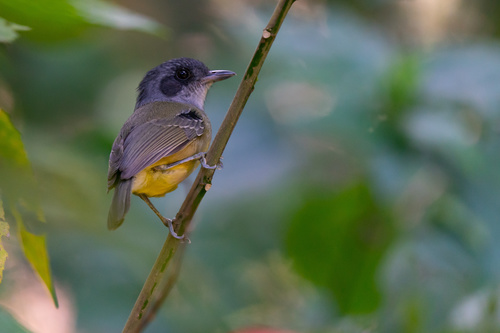
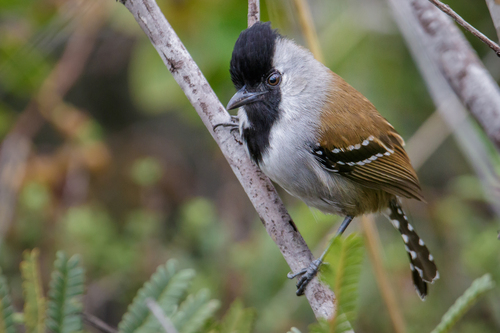
The silvery-cheeked antshrike, scientifically named Sakesphorus cristatus (Wied-Neuwied, 1831), reaches about 14 cm (5.5 in) in length. Both sexes of this bird have a crest. For adult males of both recognized subspecies, the forehead, crest, front of the face, throat, and center of the breast are black. The remaining parts of the head and underparts are grayish white, the back is brown, the wings are black with white-tipped coverts and cinnamon-edged flight feathers, and the tail is black with white spots and white feather tips. Adult females of the nominate subspecies have rufous coloration on the forehead, crest, and crown; the rest of the head and all underparts are pale buffy brown. Their back matches the brown color of males' backs, their wings are brown with white-tipped coverts and cinnamon-edged flight feathers, and their tail is rufous-brown with no white markings. Adult females of subspecies S. c. niedeguidonae have an amber crest and crown, an olive-brown back, thinner cinnamon edges on flight feathers than nominate females, and a tail marked with large black, white, and amber bands. This species is native to the caatinga habitat of northeastern Brazil. Of the two subspecies, S. c. niedeguidonae occurs further north and has a smaller geographic range. It ranges from Ceará and central and western Rio Grande do Norte south to the left bank of the middle São Francisco River, and extends south of the river downstream into the Raso da Catarina area. The nominate subspecies occurs from south of the São Francisco River south into central Minas Gerais. The silvery-cheeked antshrike inhabits the understorey to mid-story of deciduous forest and arid caatinga, and also occurs in the ecotone between deciduous forest and ridgetop evergreen forest. It favors areas with closed forest canopy, such as mata-de-cipó. Its elevation range extends from sea level up to 1,100 m (3,600 ft).