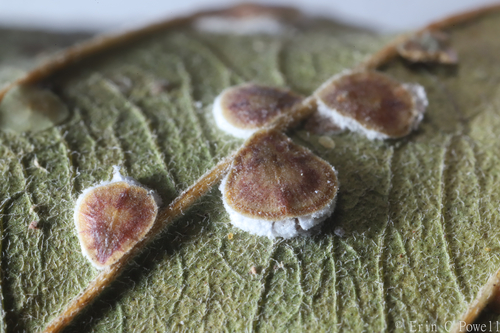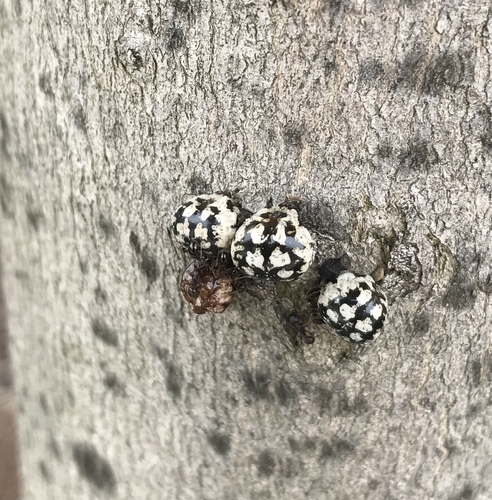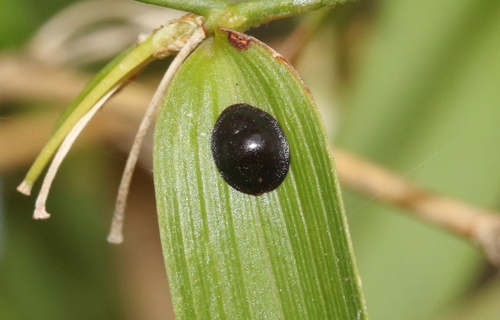
About Saissetia oleae (Olivier, 1791)
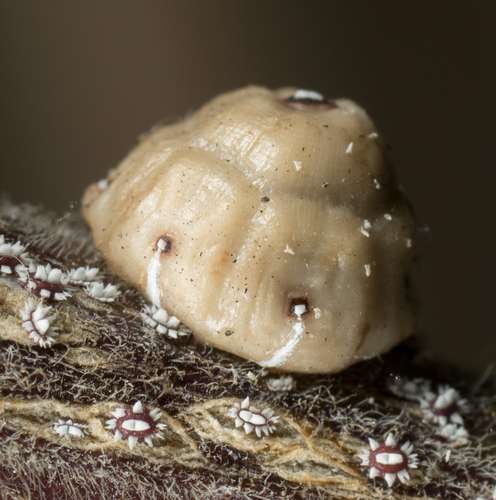
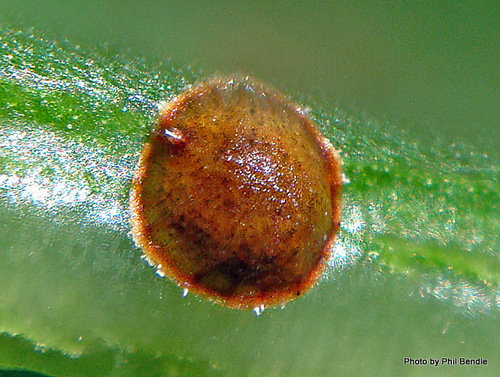
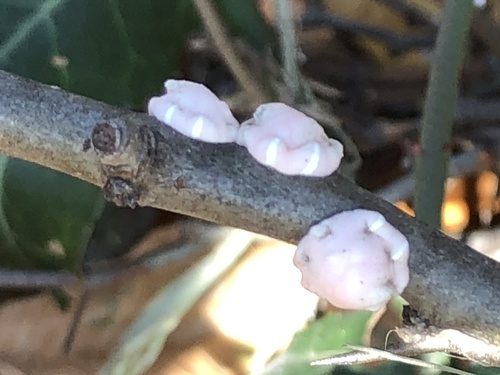
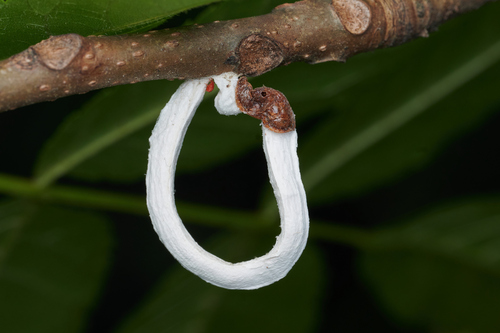
Saissetia oleae (synonym Coccus oleae) is a species of scale insect belonging to the family Coccidae. It counts as one of the three main phytophagous parasites of the olive tree (Olea europaea), alongside the olive fruit fly (Bactrocera oleae) and the olive moth (Prays oleae). While it is a common parasite that occurs most frequently on olive trees, it is a polyphagous species. It also attacks other plants, though less often, including citrus trees and various ornamental shrubs such as oleanders, pittosporums, sago palm, and euonymus. S. oleae likely originated in South Africa, but has since spread to become globally distributed around the world. It has been documented feeding on 113 plant species from 49 different families. In addition to being a major pest of olive trees, it is one of the most significant pests of citrus, particularly in the Mediterranean region, California, Florida, and South America. The parasitic wasp Metaphycus helvolus, which is native to South Africa, has been introduced to California. This introduction has caused a dramatic reduction in the incidence of this scale insect in citrus orchards. The soft body of an adult female olive scale is hidden under a dark grey or brownish-black covering that grows and hardens over time. Male S. oleae scales are not found in most regions, and the species reproduces through parthenogenesis. Females are generally immobile, and can lay up to 2,500 eggs in batches. Eggs are kept under the female's scale covering until they hatch into nymphs called "crawlers". These crawlers are mobile: they leave the covering under the scale and disperse to other areas of the host plant. They moult twice before reaching adulthood, and all life stages of this insect feed by sucking sap from their host plant.