About Saissetia coffeae (Walker, 1852)
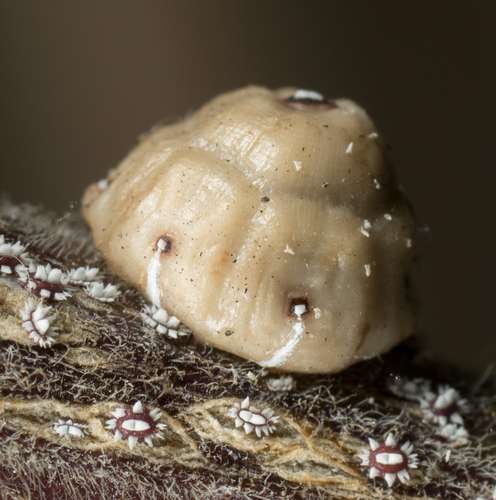
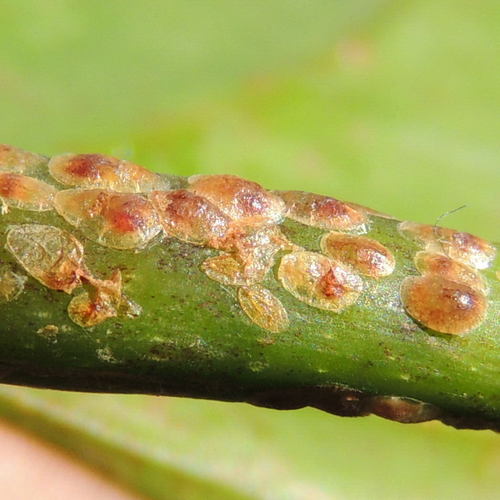
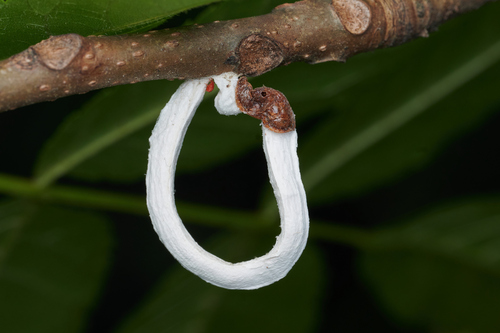
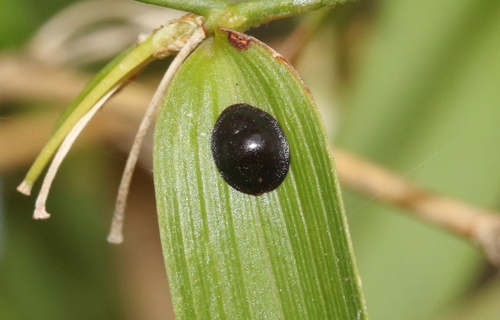
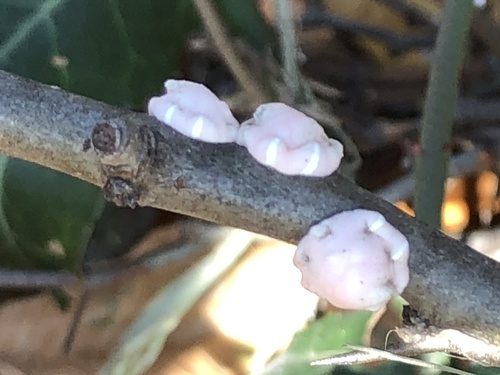
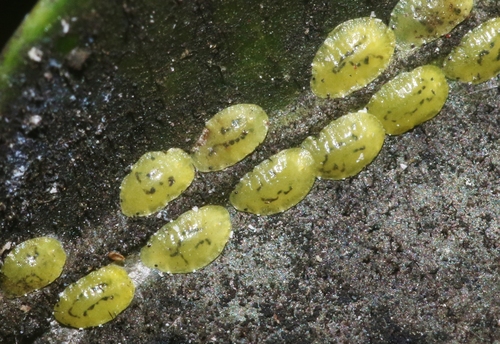
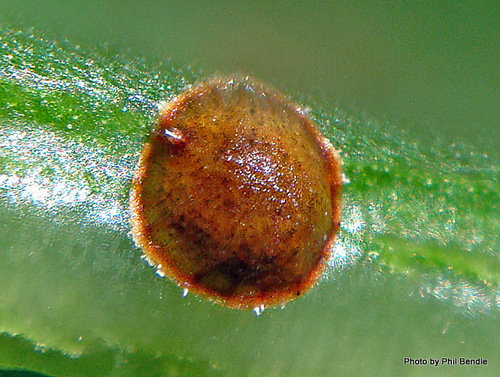
Adult Saissetia coffeae, also known as hemispherical scale, have a diameter ranging from roughly 2 mm (0.08 in) to 4.5 mm (0.18 in), and this size variation is largely determined by the host plant species. Adult scales are brown, smooth, and shiny, and lie closely pressed against plant stems or leaves, resembling a tiny military helmet. Young scales typically have a slightly ridged surface, which sometimes forms the shape of an "H". Like other scale insects, this species has no limbs, is immobile in its non-crawler stages, and feeds on plant sap by piercing plant tissues with its mouthparts. Saissetia coffeae is distributed across West, Central, and East Africa, Madagascar, tropical and subtropical Asia, North, Central, and South America, and the Caribbean. All adult hemispherical scale insects of this species are female, and reproduction occurs via parthenogenesis. The eggs of Saissetia coffeae are pinkish-beige, oblong, and measure about 0.7 mm (0.03 in) in length. A single female can lay up to one thousand eggs, which stay hidden under the adult scale covering. The parent female dies shortly after laying her eggs. Eggs hatch into first instar nymphs called "crawlers", which is the only mobile life stage of this species. Crawlers leave the protection of their mother's scale to disperse to new locations on the plant. They have short antennae and limbs, a pair of red eyespots, and a pair of long bristle-like setae at their posterior end. Once crawlers find a suitable feeding spot, they insert their mouthparts into the plant, shed their outer skin, and develop into second instar nymphs. They go through one more instar stage before reaching adulthood. The full development period from egg to adult takes forty days or longer, and there can be several generations of this scale each year. Hemispherical scale infects a wide variety of plants, including agricultural crops such as coffee, tea, sugar apple, and pumpkin, as well as greenhouse plants and ornamental shrubs. It can be found on host plant stems, leaves, and fruits. This species produces large amounts of honeydew, which promotes the growth of sooty mold on host plants. Infestation also causes leaf drop and stunted shoot growth in the host plant. Ants often visit these scales to feed on the honeydew, and in turn protect the scales from their natural enemies. Saissetia coffeae is targeted by parasitoid wasps, including the same parasitoids that have been introduced across the world to control Saissetia oleae, a major olive tree pest.