About Saguinus bicolor (Spix, 1823)
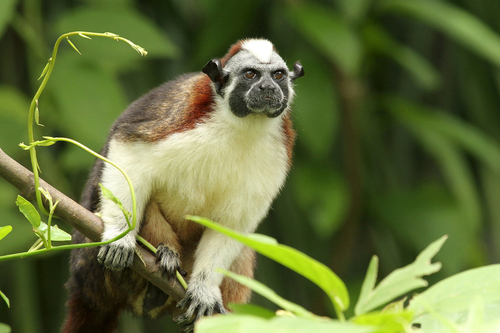
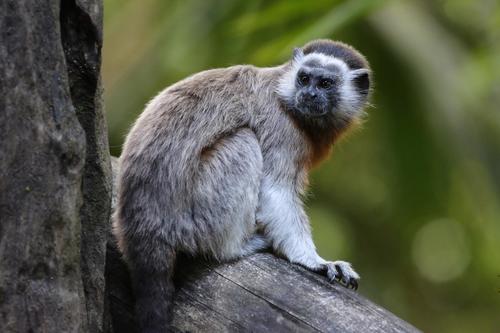
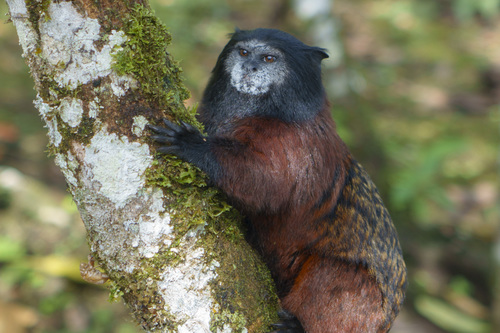
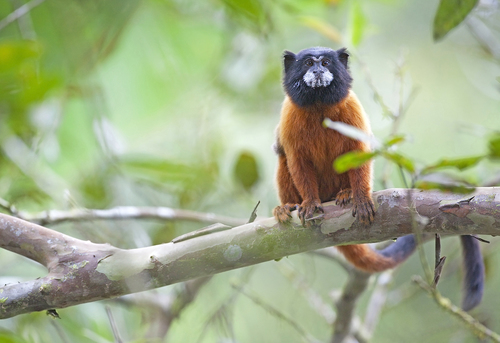
The pied tamarin, scientifically named Saguinus bicolor, does not show sexual dimorphism. Both males and females weigh around 500 g (18 oz) and have a body length between 28–32 cm (11–13 in). Males and females also share the same coloration pattern: they have a black hairless face, a white upper body, and a lower body that ranges from light to dark brown. Its hairless face earned the species the nickname "Brazilian bare-faced tamarin". Unlike many primates, pied tamarins do not have nails; they have claws instead, which let them climb trees quickly to get food or escape predators. These claws also let them dig into tree bark to access and eat sap. In the wild, the pied tamarin has an average life expectancy of around 10 years, and this lifespan can double when the species lives in captivity. The pied tamarin is a New World monkey. Its range lies within the city limits of Manaus, the capital of Brazil's Amazonas state, and extends up to 35 km (22 mi) north and 100 km (62 mi) east from Manaus. Its main distribution is in the interfluvial areas between the Rio Cuieiras and Rio Preto da Eva. It also occurs in the adjacent interfluvial areas between the Rio Preto da Eva and Rio Urubu, where it is comparatively rare. Each group of pied tamarins has a home range covering 10–100 ha (25–247 acres). This species lives in old-growth primary forests, sand forests, and smaller secondary forest fragments, and its population density is higher in secondary forest fragments than in primary forest. Pied tamarins live in mixed-sex groups of 2 to 15 individuals, with low levels of competition within groups. Average group sizes vary across locations: the average is 4.8 individuals per group in Reserva Florestal Adolpho Ducke, while areas surrounding Manaus report a mean group size of 6.19 individuals. Groups include multiple adult males and females. In each group, only a single dominant female reproduces, and she suppresses the estrus cycles of other females in the group by releasing pheromones. Like other tamarin species, the pied tamarin is polyandrous, meaning the dominant female mates with multiple males. Because only the dominant female mates, no other females in the group breed, which limits the species' population growth. The breeding season runs from March to May. After a gestation period of 120 to 195 days, the pregnant dominant female typically gives birth to twins. Young pied tamarins are primarily cared for by the father, and are only brought to the mother to nurse. The entire group participates in caring for the dominant female's offspring, a behavior called alloparenting.