About Sagittaria montevidensis Cham. & Schltdl.
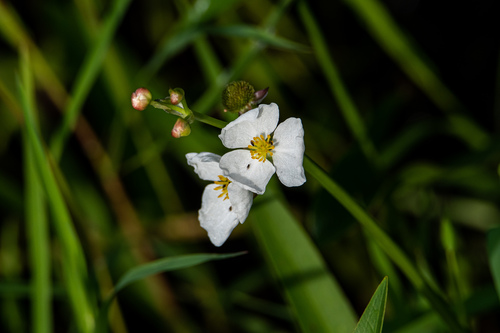
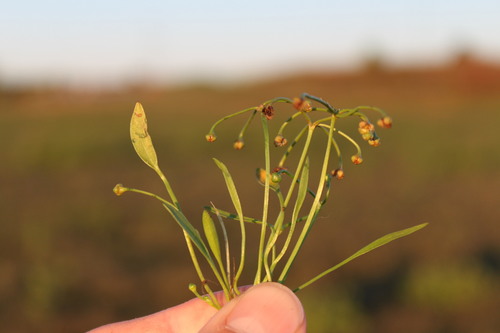
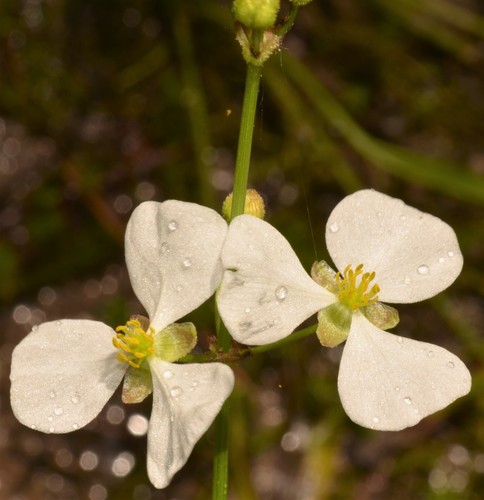
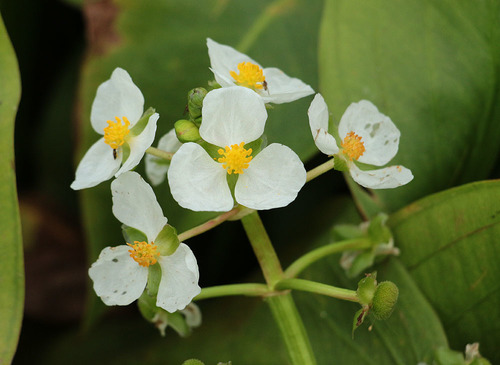
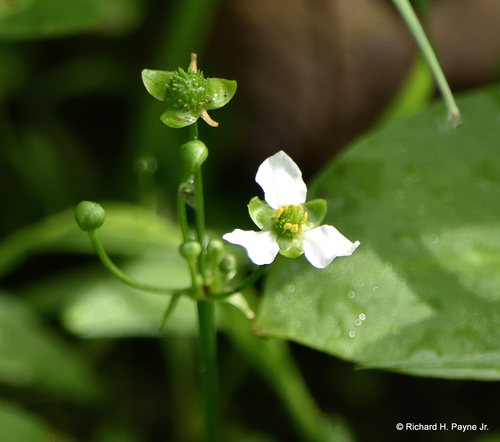
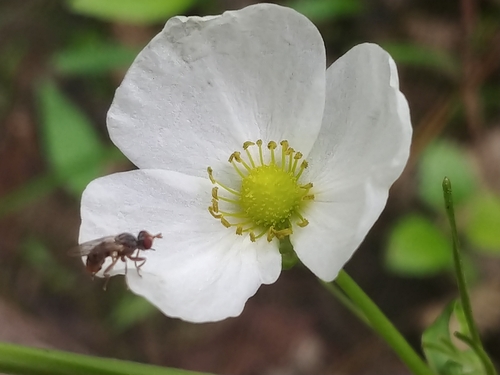
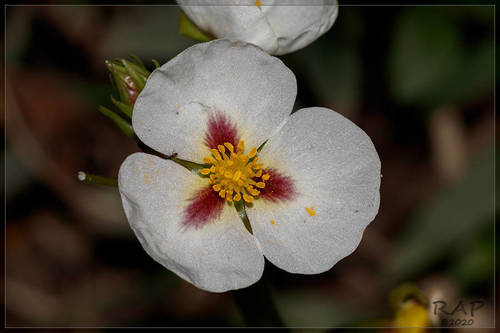
Sagittaria montevidensis Cham. & Schltdl. is a robust, stemless, rhizomatous aquatic plant. Young plants develop ribbon-like submerged leaves, while mature plants produce leaves that emerge above the water surface. The leaves are sagittate, glabrous, and can grow up to 28 centimetres (11 inches) long and 23 cm (9 inches) wide. This species has terete, spongy petioles that may exceed 0.75 metres (2+1⁄2 feet) in length and reach up to 7.5 cm (3 inches) in thickness. Inflorescences are typically decumbent and shorter than the leaves. Flowers grow in whorls or pairs at nodes, and measure 2 to 3 centimeters in diameter. Each flower has three petals, each white with a distinct wine-colored stain, and three green sepals. Its thick pedicels can reach 5 cm (2 inches) in length. Flowering occurs from June to September. This species is widespread across wetlands of North America (the United States, Canada, and Mexico) and South America (Brazil, Bolivia, Ecuador, Peru, Argentina, Chile, Paraguay, and Uruguay). In North America, its distribution is disjunct: it occurs primarily across a broad area stretching from West Virginia to Texas to South Dakota, with isolated populations recorded in New Brunswick, Maine, Connecticut, New York, New Jersey, California, Florida, and Alabama. It is reported to be naturalized in Spain, Tanzania, and the island of Java, Indonesia. It grows preferentially at the edges of ponds, in shallow, often only temporarily existing bodies of water.