About Sagittaria lancifolia L.
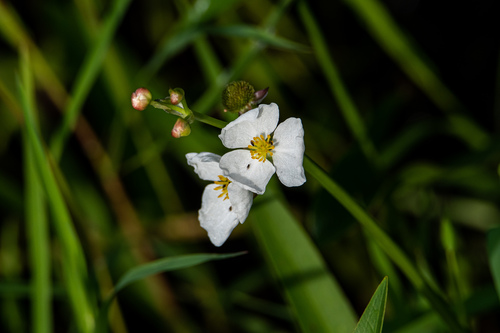
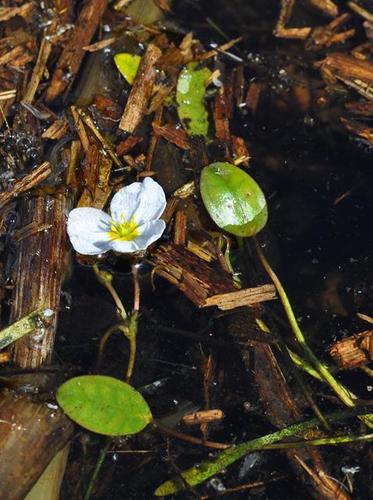
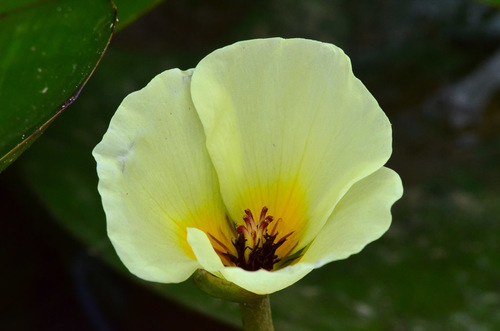
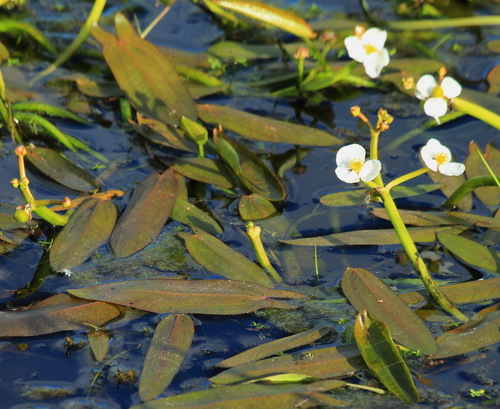
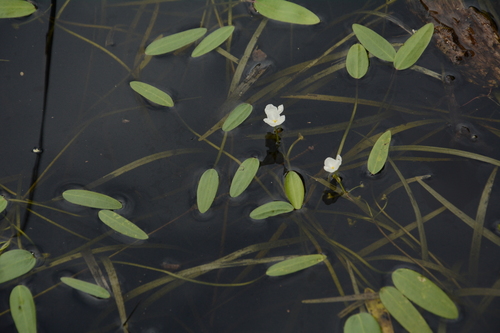
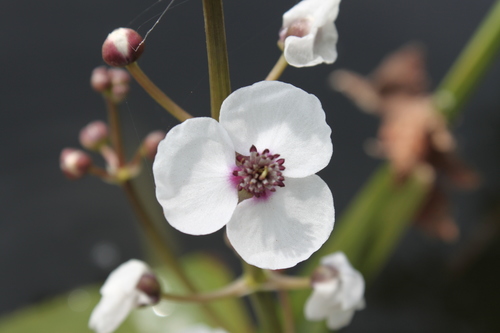
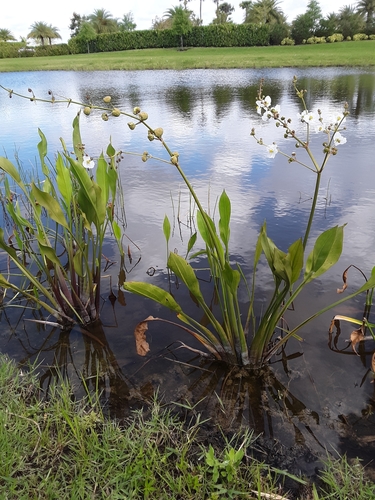
Sagittaria lancifolia L. is a water plant that is easily recognized by its large, lance-shaped leaves that grow upward from underground rhizomes. It produces showy, three-petaled white flowers that form at the end of long, thick stalks. Each flower has three green sepals, three white or pink-tinged petals, at least six stamens, and pistils that may occur on separate flowers from stamens. This plant grows in fresh or brackish water, and is most commonly found in ditches, marshes, swamps, and along the shores of lakes and streams. Sagittaria lancifolia reproduces both asexually via spreading rhizomes and sexually via production of numerous achenes, which are dry fruits that each hold one seed. Achenes are dispersed by animal vectors and through hydrochory, meaning dispersal by water, wind, or gravity. Achenes only germinate when exposed to light, and can germinate with or without standing water. Their germination period is shorter when the achenes are submersed in water. Temperature affects germination: 100% germination occurs at 20 °C (68 °F). Germination rates are reduced in anaerobic conditions, and the plant's overall growth is also temperature-dependent. This species is native to the southeastern United States, where it occurs in every coastal state from Delaware to Texas. It is also recognized as native to Mexico, Central America, the West Indies, and northern South America. It has become naturalized on the island of Java in Indonesia.