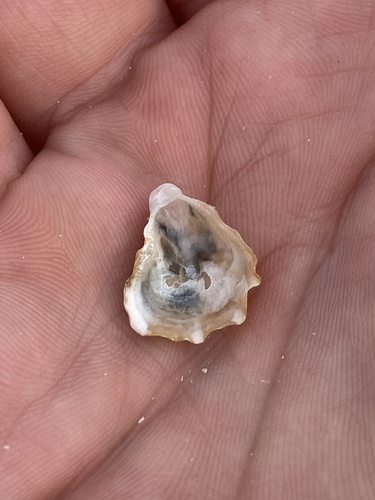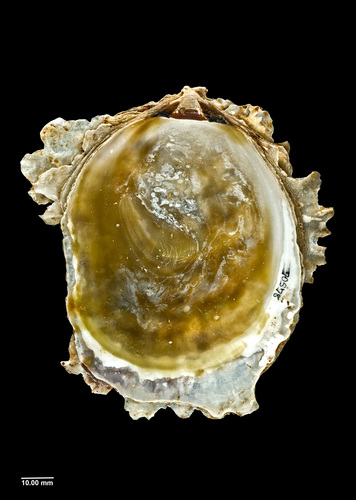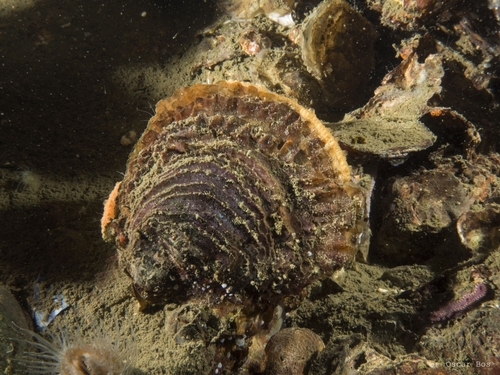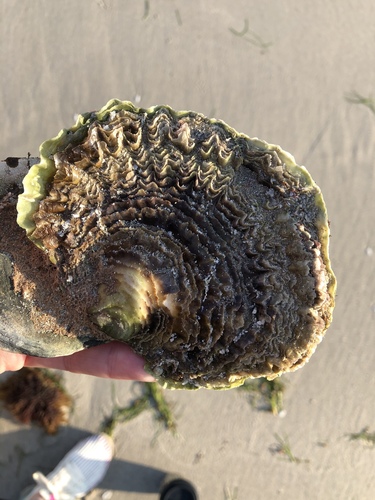
About Saccostrea glomerata (Gould, 1850)
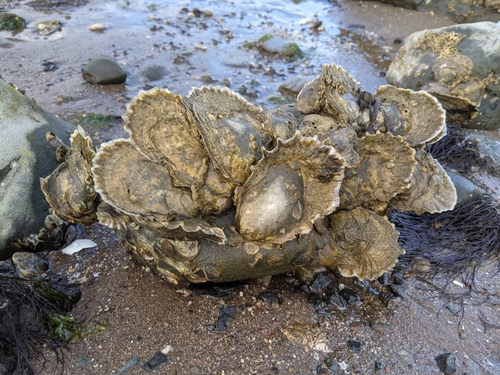
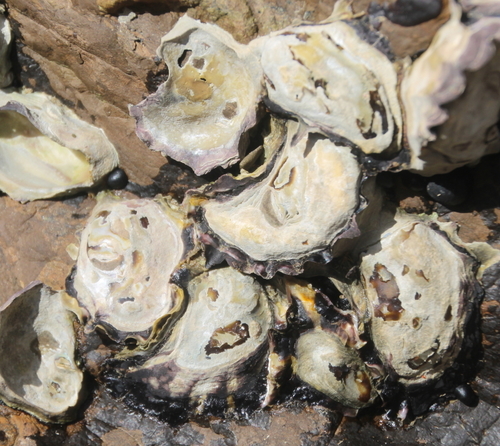
Saccostrea glomerata is an oyster species in the family Ostreidae, endemic to Australia and New Zealand. In Australia, it is called the Sydney rock oyster and is commercially farmed; in New Zealand, where it is no longer farmed, it is known as the New Zealand rock oyster or Auckland oyster. In Australia, this species occurs in bays, inlets, and sheltered estuaries. Its range extends from Wingan Inlet in eastern Victoria along the east coast of New South Wales, north to Hervey Bay, Queensland, around northern Australia, and south along the west coast to Shark Bay in Western Australia. Oyster spat travels down Australia’s east coast via the East Australia Current. Small populations also exist on the islands of the Furneaux archipelago in Bass Strait, and in Albany on the south-west coast of Western Australia, where this species is farmed. Sydney rock oysters can tolerate a wide range of salinities. They typically occur from the intertidal zone down to 3 metres (9.8 ft) below the low-water mark. They are filter feeders that strain planktonic algae from the water. Their predators include birds, fish, stingrays, mud crabs, and starfish; the Australian pied oystercatcher (Haematopus longirostris) feeds on them particularly frequently. Selective breeding of farmed rock oysters has successfully developed resistance to two protozoan oyster diseases: QX disease (Marteilia sydneyi) and winter mortality (Bonamia roughleyi). Sydney rock oysters are broadcast spawners, meaning they release eggs and sperm into open water where fertilization takes place. Within hours of fertilization, eggs develop into free-swimming planktonic larvae. Larvae swim in estuarine and coastal waters for up to three weeks, during which they develop transparent shells and retractable feet. After this period, larvae use their feet to find a suitable site and settle on clean substrate. Once attached, the larval foot is reabsorbed, the shell darkens, and the young animal takes on the appearance of an adult oyster. Growth rates depend on local conditions, but individuals generally reach 50 grams (1.8 oz) in three years. Sydney rock oysters may change sex over their lifetime: many start as males and later change to females, and around 60% of prime eating oysters are female. Selective breeding has reduced the time needed for the oysters to reach market size from three years to two.