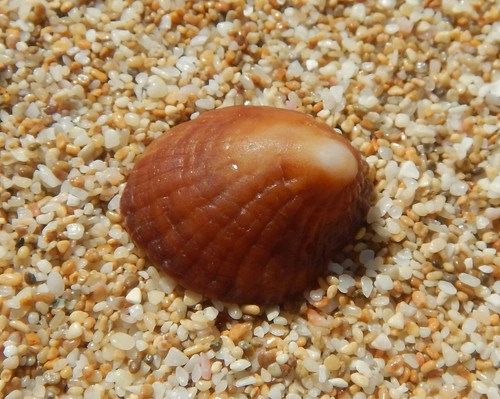
About Sabia australis (Lamarck, 1819)
Sabia australis (Lamarck, 1819) typically has a conical shell, whose color ranges from white to yellow or orange. The shell surface is usually rough and textured; this texture provides protection against environmental conditions and acts as camouflage from predators. Shell size varies based on factors including age and environmental conditions, and typically grows up to 30 millimeters long. This species is native to southeastern and southwestern Australia, including New South Wales, Tasmania, Victoria, South Australia, and Western Australia, where it is widespread and common. It is also widespread and commonly found in Tasmanian waters, and is considered cryptogenic to O'ahu, Hawai'i. Sabia australis lives in the intertidal zone and shallow waters. Sabia australis displays protandric hermaphroditism, and is a bisexual species whose sexual development is affected by how close other members of its species are. If an individual settles on a host alone, it quickly develops into a female, with a very short or even non-existent male phase. If an individual settles next to a female, it develops into a male and lives on the back of the female. Female Sabia australis lay up to 10 eggs, mostly during winter. Each egg holds 9 to 24 embryos that hatch into crawling juveniles. These juveniles then drift or swim to find a host to settle on, and often cluster together on a single host.

