About Sabella pavonina Savigny, 1822
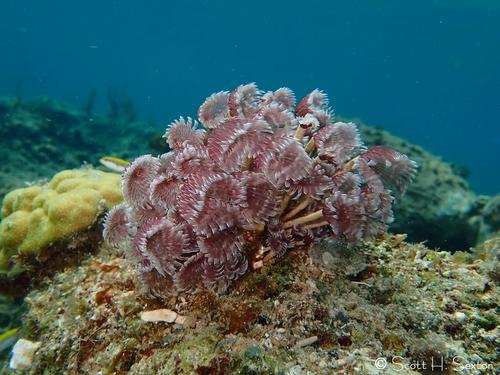
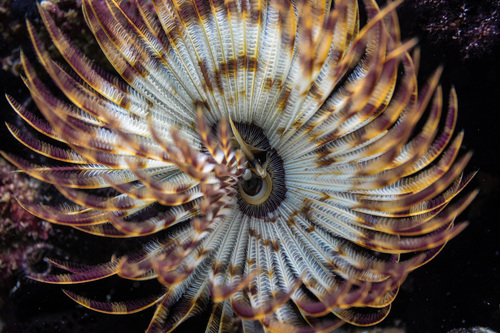
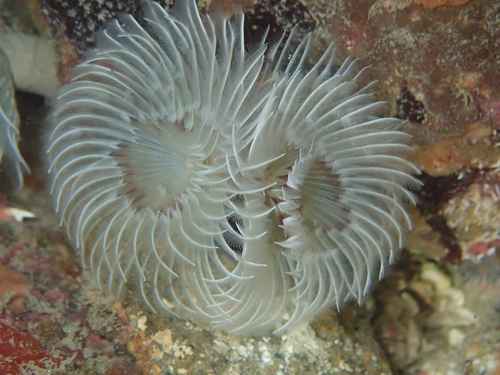
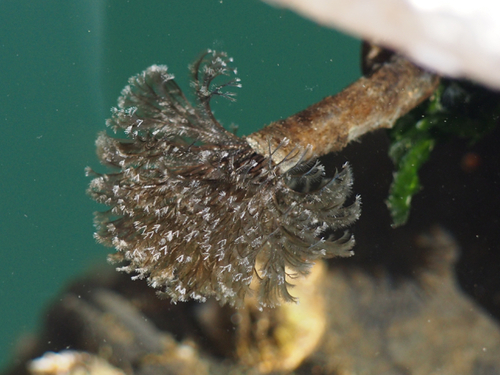
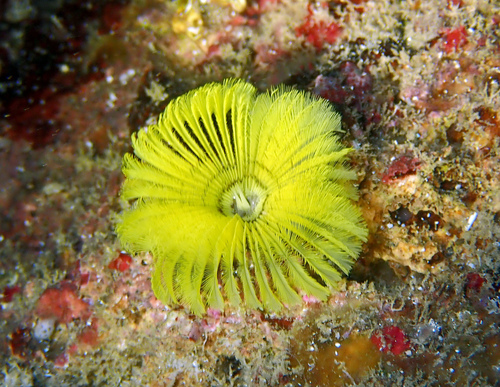
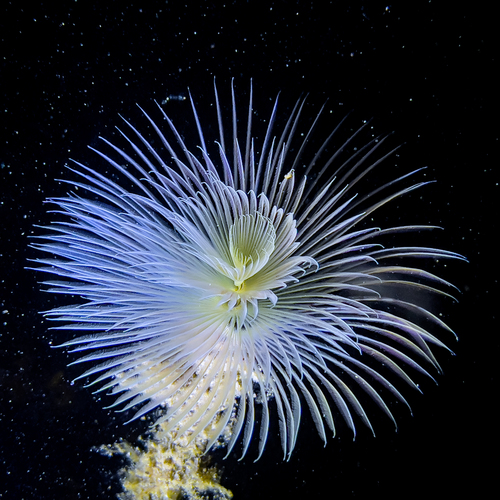
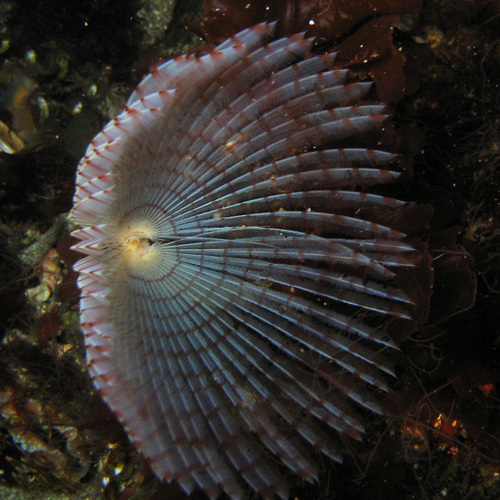
Sabella pavonina, commonly known as the peacock worm, is a marine polychaete worm in the family Sabellidae. This species occurs along the coasts of Western Europe and the Mediterranean. It inhabits shallow tidal waters with a mud, sand, or gravel seabed, and is occasionally found on rocks or shipwrecks. Adult peacock worms reach 10–25 centimetres (4–10 in) in length. Their elongated body is divided into 100–600 small segments. The head bears two fans of 8–45 feathery radioles, which grow from fleshy, semi-circular lobes. The body is mostly grey-green, while the radioles are brown, red, or purple with darker bands. The peacock worm lives inside a smooth tube constructed from fine mud or sand particles bound together with mucus. This tube sits upright, with its lower end attached to stones and its upper end protruding from the seabed. When submerged, the worm extends its feeding crown out of the tube, and uses cilia on the radioles to circulate water through the crown. Small food particles are carried down the radioles to the worm’s mouth, while larger particles are either rejected, or cemented with mucus to extend the tube’s length. The crown is highly sensitive to light and pressure, and retracts quickly when it detects movement or shadow. Sabella pavonina and other sabellid worms are heavily preyed on by bottom-feeding fish, but the species can regenerate even when a large portion of its tube and its own body has been bitten off.