About Russula sanguinea Fr.
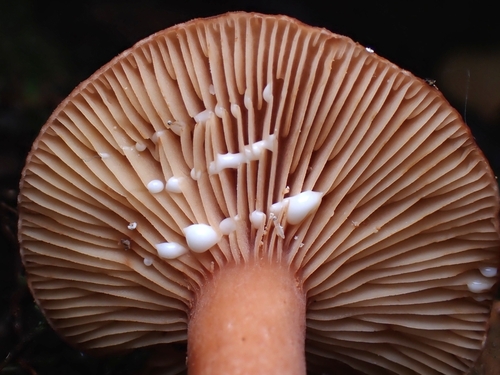
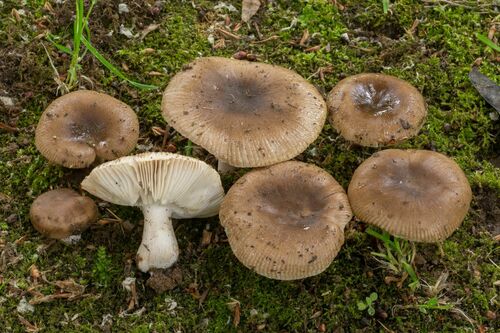
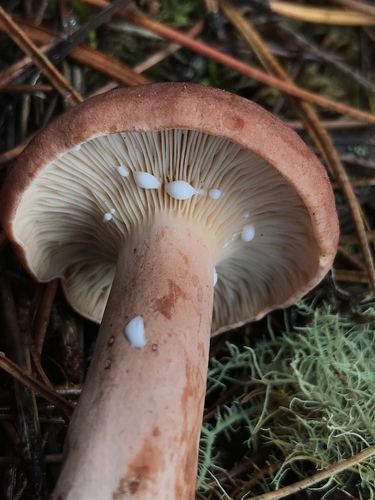
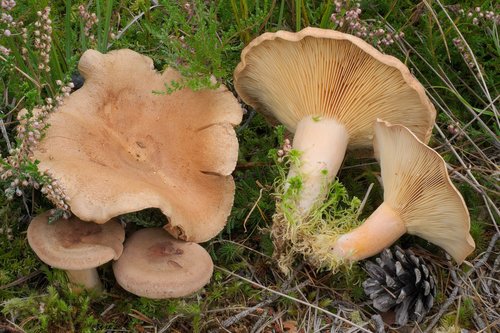
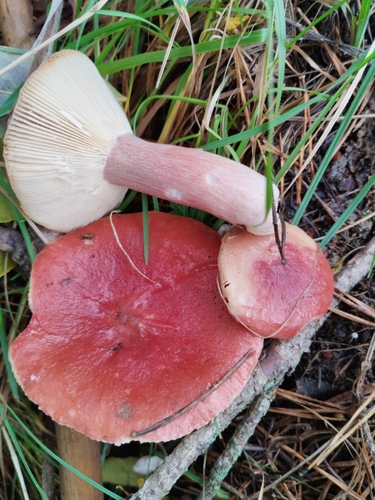
The robust cap of Russula sanguinea Fr. can grow up to 10 cm (4 in) in diameter. It is convex when young, flattens as it matures, and sometimes develops a concave, saucer-shaped form when fully grown. Young caps are bright blood-red or rose-colored, fading slightly with age and often developing paler patches. The cap skin only peels away from the margin of the cap. The stem is firm and robust; it is occasionally white, but more often tinted with the same color as the cap, marked with vertical streaks, and tends to turn greyish pink as it ages. The gills are cream to pale ochre, adnate to slightly decurrent, narrow, and forked. The spore print is also cream to pale ochre. The flesh is white, with a somewhat hot and peppery, sometimes bitter taste on the tongue, and a faint fruity odor. Russula sanguinea Fr. (referred to as Russula sanguinaria in the original distribution and habitat section) appears in summer and autumn. It is widespread across northern temperate zones, forms mycorrhizal relationships with softwood trees, and grows most often with Pinus (pine) in coniferous woodland on sandy soils.