About Russula fragilis Fr.
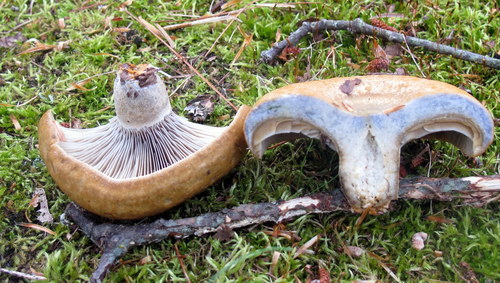
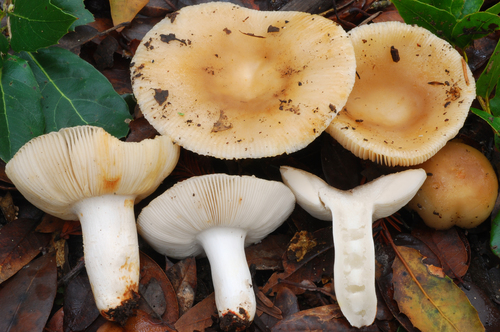
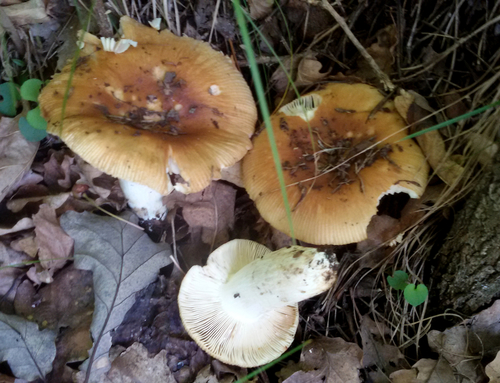
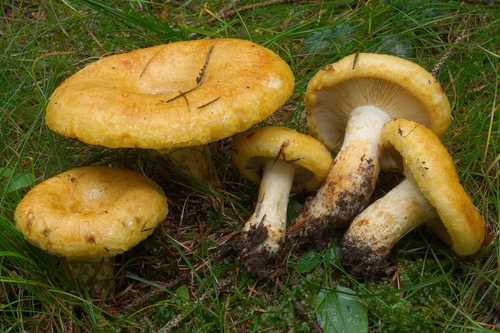
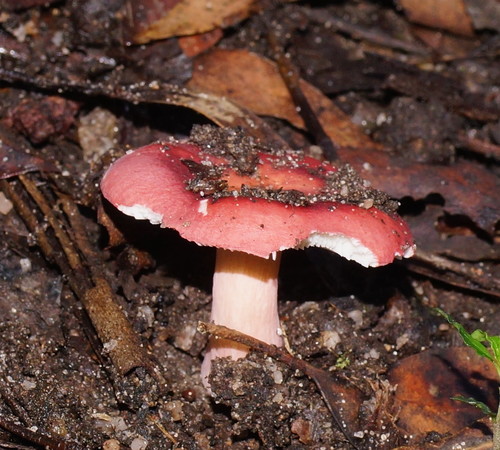
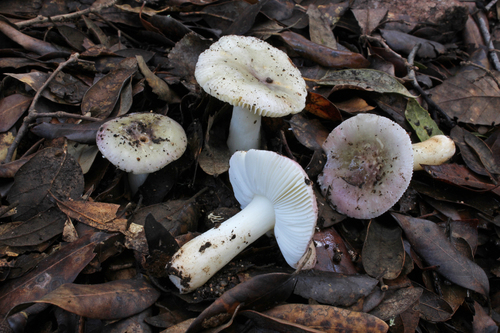
Russula fragilis Fr. has a cap 2–5 centimetres (3⁄4–2 in) in diameter. The cap varies greatly in colour: it can be dark purplish with a dark, almost black centre, or come in various shades of olive-green, violet-pink, or even pale yellow. Its colour tends to fade quickly and can become very pale. When young, the cap is convex, and it flattens as it matures. The cap skin can be peeled to three quarters of its diameter, and older specimens often have a furrowed margin. The stipe is fragile, white, long relative to the cap size, and narrowly club-shaped. The gills are adnexed and white, producing a white spore print. The free edges of the gills have distinctive nicks or notches that are visible under a hand lens, making this a very reliable diagnostic feature for identifying the species. The flesh is white, has a very hot taste, and a fruity odour. Russula fragilis fruits in late summer and autumn, and usually grows in small groups. It is widespread across the northern temperate zones of Europe, Asia, and North America. It is probably mycorrhizal with a range of trees, including birch and oak, and often grows on or near rotted wood. This mushroom is inedible, due to the toxins it contains and its very hot taste. Many hot-tasting Russula species cause gastrointestinal issues when consumed, leading to diarrhoea and vomiting.