About Rumex sanguineus L.
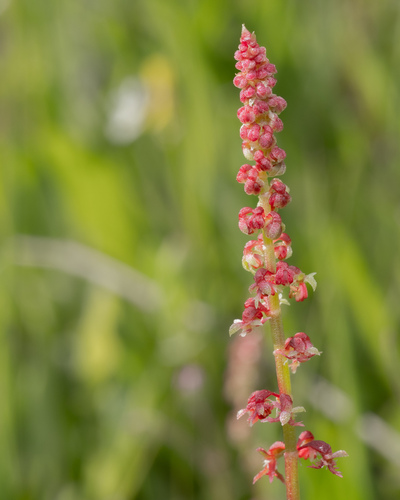
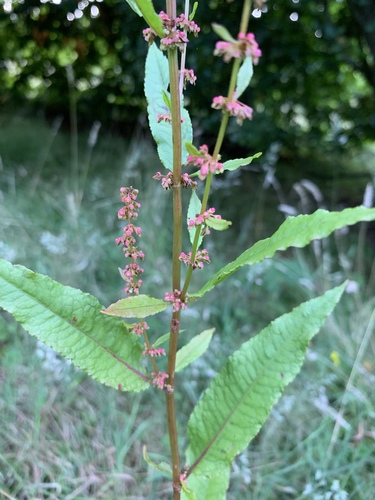
Rumex sanguineus L. has two recognized varieties. In the nominate variety, R. sanguineus var. sanguineus (red-veined dock or bloody dock), leaf veins are bright red; in R. sanguineus var. viridis (wood dock), the entire leaf is green. The leaf blade is lanceolate with a more or less pointed tip, averaging 10 to 30 cm (3.9 to 11.8 in) long and 2.5 to 6 cm (0.98 to 2.36 in) wide. Rumex sanguineus grows in shaded or damp habitats and flowers in summer. Its inflorescence occupies the upper two-thirds of the stem, is lax, interrupted, and broadly paniculate, with normally 10 to 20 flowers in each well-spaced whorl. The achenes range in color from dark reddish brown to almost black. The red-veined variety is very distinctive, while the green variety can be distinguished from the very similar Rumex conglomeratus by its more slender and erect growth habit. Rumex sanguineus is common across most of Europe south of approximately 60 degrees north latitude, but it is not present in Russia and is rare in the Mediterranean. It grows in damp, shady places, especially in woodland, and occurs as an agricultural weed in vegetation surrounding arable fields. Rumex sanguineus is not native to North America, and most North American reports of the species actually refer to confused identifications of R. conglomeratus or immature R. obtusifolius. Wood dock (the green variety of Rumex sanguineus) is edible. However, it contains antinutritive and harmful oxalic acid and its salts (oxalates), so it is slightly toxic and should not be eaten in large quantities. Oxalate content is lower than that of the related, better-known sorrel. It is used as a wild vegetable and also cultivated, with plants and seeds sold commercially. It contains considerable amounts of vitamin C and carotene. Preferably young leaves are eaten, for example in salads, but related species such as garden sorrel and French sorrel are generally preferred for use as a vegetable. Wood dock is considered less flavorsome and is more often grown for ornamental purposes. Since mainly the leaves are valued, less conspicuous inflorescences are often removed early to stimulate more vigorous leaf growth and prevent possibly heavy uncontrolled spreading.