About Rumex hydrolapathum (Scop.) Huds.
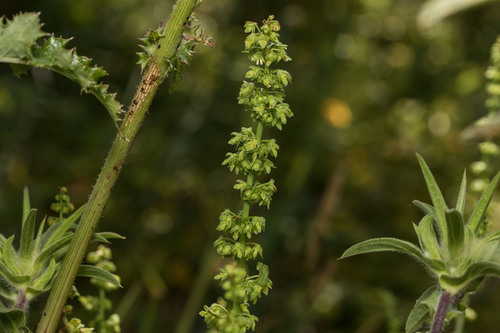
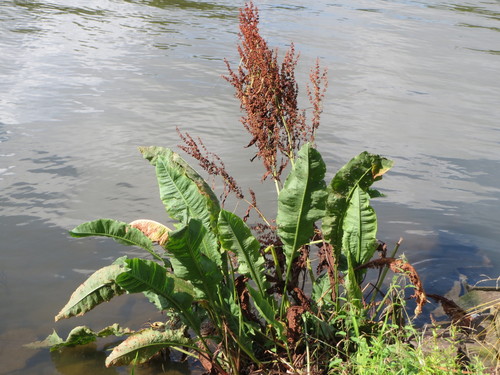
Rumex hydrolapathum, commonly known as great water dock, is a tall perennial herb that reaches up to 2 meters (6 feet 7 inches) in height. In its first year of growth, it produces a rosette of long-stalked, hairless leaves. The lanceolate leaf blades can grow up to 80 centimeters (31 inches) long, have smooth, generally unwrinkled surfaces, taper at both ends, and bear lateral veins that run at right angles to the central midrib. In following years, the plant grows an upright flowering stem that remains unbranched until it reaches the base of the inflorescence. The stem is tough and grooved; it is green when young and turns reddish as it ages. Stem leaves grow in an alternate arrangement, are arching, and decrease in size further up the stem. The plant’s inflorescence is a compound raceme holding numerous small, regular flowers. The flower perianth is arranged in two whorls of three segments each: the outer whorl segments spread outward, while the inner whorl covers the developing fruits. Each flower has six stamens, three fused carpels, and three styles. The fruit is a triangular-ovate achene that is green when young and turns brown when mature. Great water dock flowers from June to September. Great water dock is native to Europe and western Asia. It grows beside lakes, rivers, and seas, typically positioned near the water margin or rooted in shallow water. This plant’s distribution impacts the distribution of the large copper butterfly. When the Norfolk fens were drained in the 19th century, the loss of great water dock led to the extinction of the large copper in that region.