About Rumex bucephalophorus L.
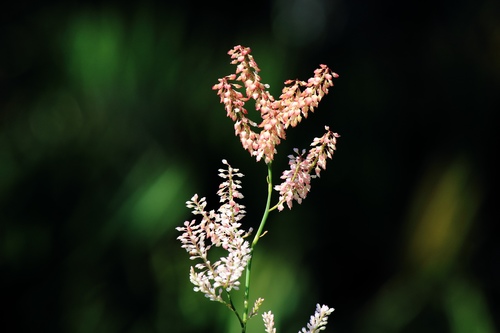
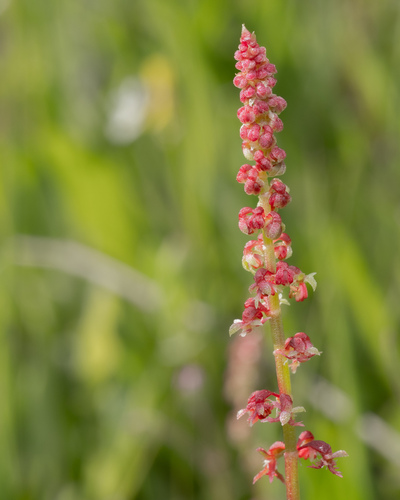
Rumex bucephalophorus L. has thin stems that branch from the plant’s base, and reach between 5 and 50 centimeters in length. Leaf shape varies widely in this species, ranging from circular and ovate to elongated and lanceolate, with intermediate forms also occurring. Pedicels are heteromorphic, a trait that often helps distinguish this species from other plants. Flowers typically grow in clusters of 2 to 3, and are also heteromorphic. Flower shape varies considerably like the leaves, but are generally triangular and 2–4 mm long. The flowers are red, and bloom from December through May. While the genus Rumex is mostly distributed across North America and Europe, Rumex bucephalophorus prefers sandy and rocky habitats, so it most often grows near the sea. Its widest distribution includes the Atlantic coast of southwestern Europe, northwestern Macaronesia, Morocco, and the coastlands of the Mediterranean Basin. Rumex bucephalophorus has no known documented uses, but it is classed as an edible plant. There is a potential risk associated with consumption, however: its leaves contain high levels of oxalic acid, which can be dangerous when eaten in large quantities. The oxalic acid also gives the leaves an acidic, lemon-like flavor.