About Rugilus rufipes Germar, 1836
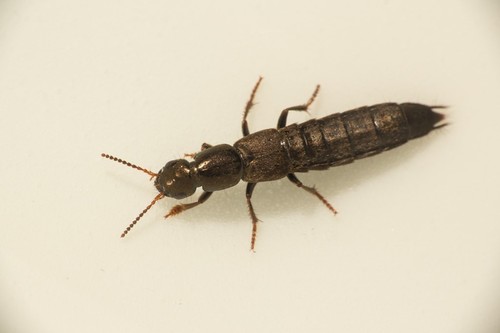
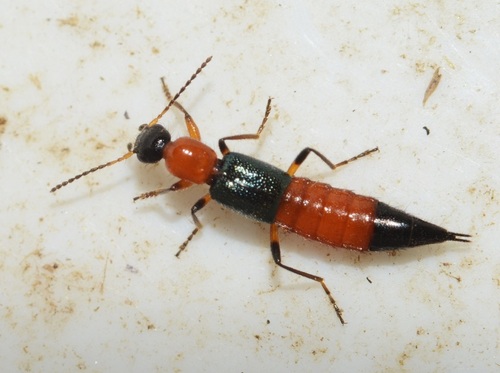
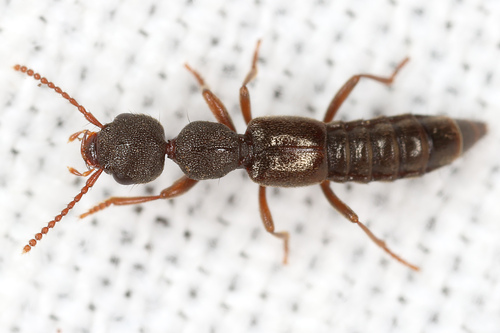
Rugilus rufipes Germar, 1836 can be identified by its elongated body, which measures approximately 5 to 7 mm in length. The beetle’s coloration is primarily dark brown to black, with contrasting red legs and antennae. Its elytra are relatively short, and expose several abdominal segments. This species thrives in a wide range of habitats, including forest leaf litter, under stones, and within decaying wood. It is particularly common in moist environments that have abundant organic matter. Rugilus rufipes is widely distributed across Europe, and has also been recorded in various regions of North America. It is an adaptable species, and can be found in both rural and urban environments. Rugilus rufipes is a predatory beetle, that feeds primarily on other small invertebrates. It is active year-round, with peak activity occurring during the warmer months. This beetle plays a crucial role in controlling populations of soil-dwelling pests. The life cycle of Rugilus rufipes includes four distinct stages: egg, larva, pupa, and adult. Larvae are similar in appearance to adult Rugilus rufipes, but are smaller and lack fully developed wings. The species undergoes complete metamorphosis, and the entire life cycle takes several weeks to complete under optimal conditions.