About Ruditapes philippinarum (A.Adams & Reeve, 1850)
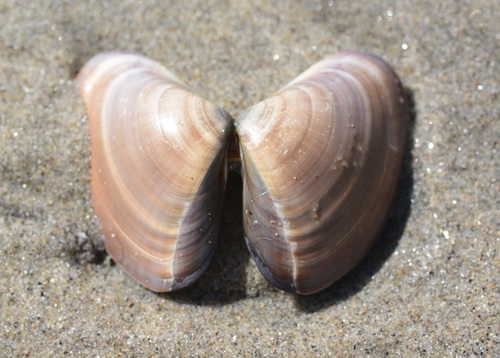
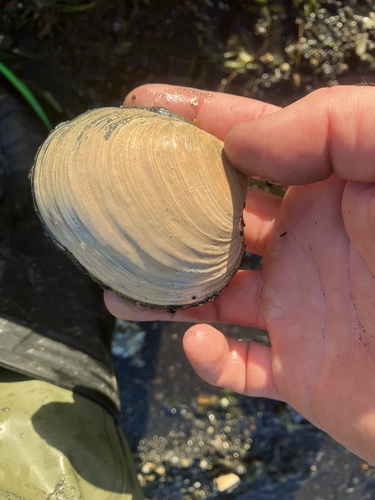
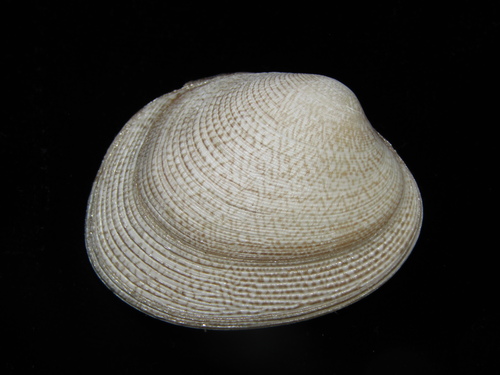
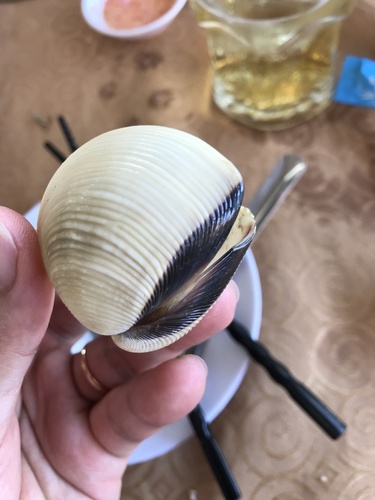
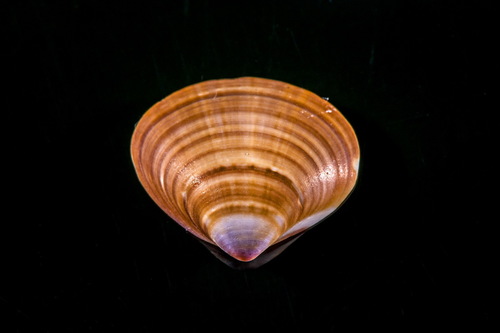
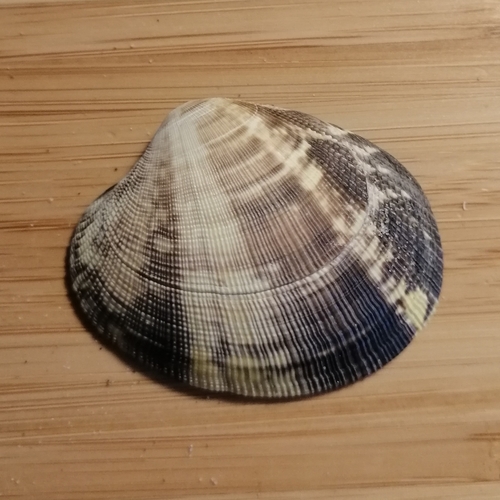
Ruditapes philippinarum (A. Adams & Reeve, 1850) has an elongate, oval shell sculptured with radiating ribs. Adults are generally 40 to 57 millimeters wide, with a maximum recorded width of 79 millimeters. This clam is native to coasts of the Indian, Philippine, and Pacific Oceans, ranging from Pakistan and India north to China, Japan, Korea, and the Kuril Islands. It has an extensive non-native distribution worldwide: it was introduced both accidentally and on purpose as a commercially harvested edible species, and is now permanently established in coastal ecosystems across many parts of the globe. This is a burrowing species that is most abundant in subtropical and cooler temperate regions. It lives in shallow waters with coarse sand, mud, or gravel substrates, and occupies both the littoral and sublittoral zones. It burrows no more than around 10 centimeters into the substrate. It sometimes occurs in eelgrass beds, and can occupy a wide range of habitat types including the intertidal zone, brackish waters, and estuaries. It can even survive under ice. It tolerates a wide range of salinities and temperatures, though it requires narrower ranges for successful breeding. Individuals may reach sexual maturity within their first year of life once they grow to around 15 millimeters wide, especially in warmer areas like Hawaii. In cooler regions, individuals reach breeding age when they are older and larger. Spawning occurs year-round in warmer regions, but only during summer in cooler regions. Fecundity increases with the clam's size: a 40-millimeter wide female can produce up to 2.4 million eggs. This species is commonly eaten as food in Asia, particularly in the Philippines, Korea, and Japan, where it is often added to soups and noodle dishes.