About Rubus sachalinensis H.Lév.
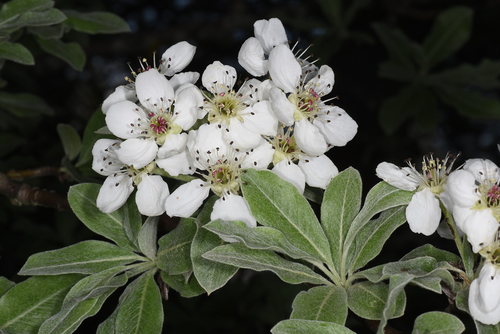
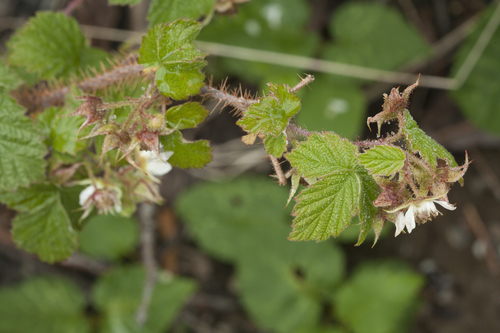
Rubus sachalinensis H.Lév. is closely related to Rubus idaeus, and shares the following biological characteristics. Plants are generally perennials that produce biennial stems called canes from a permanent perennial root system. In its first year, a new unbranched stem called a primocane grows vigorously to its full height of 1.5–2.5 m (5.0–8.3 feet). It bears large pinnately compound leaves with five or seven leaflets, and usually does not produce flowers. In its second year, the stem is called a floricane; it does not grow taller, but produces several side shoots. These side shoots bear smaller leaves with three or five leaflets. Flowers form in late spring on short racemes at the tips of these side shoots. Each flower is about 1 cm (0.4 inches) in diameter with five white petals. The fruit is red, edible, and sweet with a tart flavour, and ripens in summer or early autumn. In botanical terms, this fruit is not a true berry; it is an aggregate fruit made up of numerous small drupelets arranged around a central core. In raspberries, which are various species of Rubus subgenus Idaeobatus, the drupelets separate from the core when the fruit is picked, leaving a hollow centre. By contrast, drupelets remain attached to the core in blackberries and most other Rubus species. The fruit of this plant persists for an average of 12 days, and each fruit contains an average of 35.2 seeds. Wild harvested fruits are on average 76.3% water by weight. The dry weight of these wild fruits is made up of 39.6% carbohydrates and 2.2% lipids. This plant, like R. idaeus, is cultivated primarily for its fruit, and is occasionally grown for its leaves, roots, or other plant parts.