About Rubus allegheniensis Porter
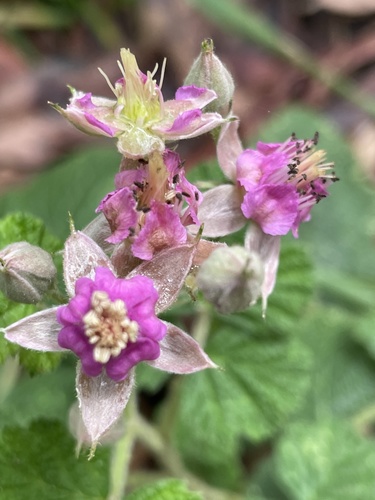
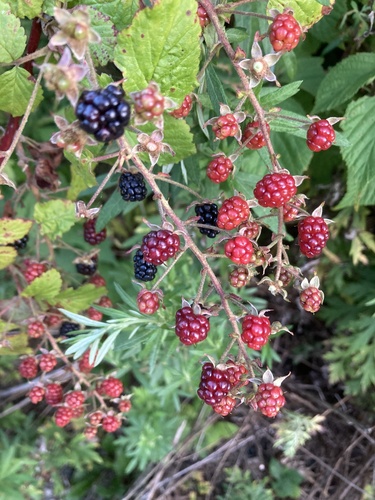
Rubus allegheniensis, commonly called Allegheny blackberry, has highly variable characteristics. It is an erect bramble that typically grows 1.5 metres (5 feet) tall, and only very occasionally exceeds 2.4 m (8 ft) in height. Single shrubs can grow up to 2.4 m or more in breadth, though the species usually forms dense thickets made up of many individual plants. Its leaves are alternate, compound, ovoid, and have toothed edges. The canes bear many prickles. In late spring, it produces white 5-petaled flowers that measure around 19 millimetres (3⁄4 inch) across. In late summer, it produces glossy, deep-violet to black aggregate fruit. This species is shade intolerant. R. allegheniensis is very common throughout forests in eastern and central North America, and is also naturalized in a small number of locations in California and British Columbia. Many mammals eat the fruit of this plant, including elk, foxes, American black bears, rabbits, raccoons, opossums, squirrels, mice, and chipmunks, while deer browse the young canes. Its blackberries are also an important food source for many bird species. Mammals and birds that eat the fruit disperse the plant's seeds in their droppings, which allows R. allegheniensis to spread to new locations. A wide variety of native bees, butterflies, beetles, flies, ants, wasps, and other insects are drawn to the nectar and pollen of its flowers, while caterpillars, grasshoppers, and beetles feed on its leaves. Birds and small mammals use the thickets formed by the canes as shelter. This species influences the understory vegetation dynamics of many forests in the eastern United States. An abundance of R. allegheniensis encourages the growth of new tree seedlings. Where herbivorous animals such as whitetail deer reduce populations of Allegheny blackberry, the competitor species Sitobolium punctilobulum (hay-scented fern) takes over. When S. punctilobulum becomes common, it restricts the growth of tree seedlings. Populations of R. allegheniensis increase greatly after events that destroy taller shrubs and trees and allow more light to reach the forest understory, such as fires or widespread wind-induced tree blowdown. These populations often decline in later years, as the tree seedlings sheltered by the blackberry canes grow and reduce the amount of light that reaches lower forest levels. The berries of R. allegheniensis are edible and nutritious. They can be eaten raw, or cooked into a variety of treats including pies, cobblers, muffins, jellies, and jams.