About Rosa virginiana Herrm.
Rosa virginiana Herrm., commonly called the Virginia rose, common wild rose, or prairie rose, is a woody perennial plant in the rose family. It is native to eastern North America, where it is the most common wild rose species.
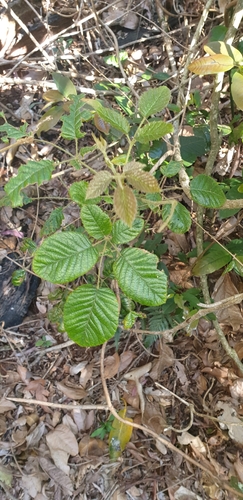
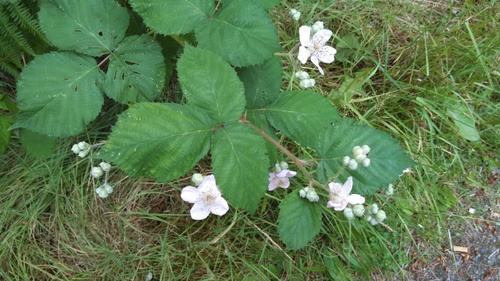
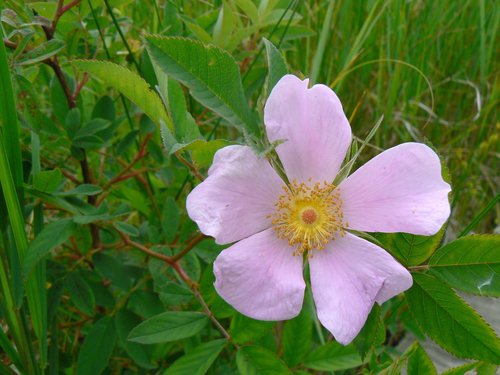
This deciduous plant forms a suckering shrub that can reach up to 2 metres in height, though it often grows shorter. Its stems are covered with numerous hooked prickles. The leaves are pinnate, and typically have between 7 and 9 glossy leaflets. Its pink flowers grow singly or in small clusters, and bloom over a long period during midsummer. The fruits are small, round, and bright red; they are rich in vitamin C, edible, and used to make jams and tea. It grows in clearings, thickets, and shore habitats. This plant attracts birds, bees, butterflies, and hummingbirds.
Charles and Bridget Quest-Ritson describe R. virginiana as "the best all-rounder among the wild roses", and note its autumn leaf coloration: "the whole plant turns yellow, orange, scarlet, crimson and brown for weeks on end". When grown in cultivation, this plant has received the Royal Horticultural Society's Award of Garden Merit.