About Rosa minutifolia Parry
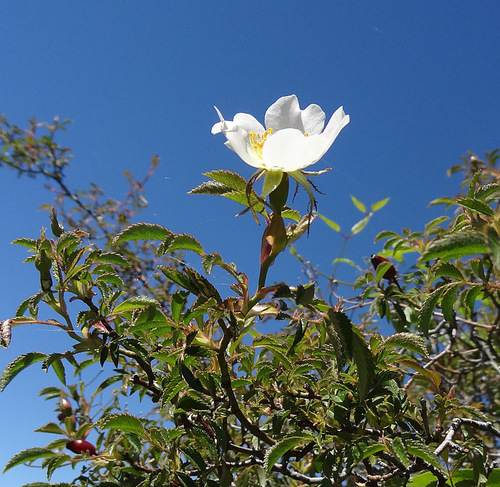
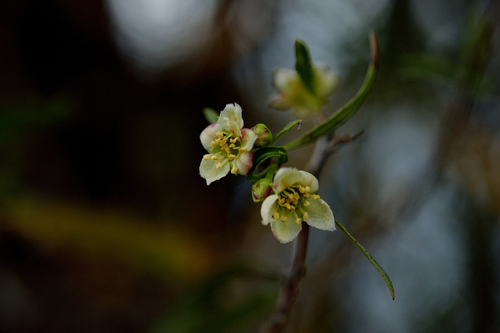
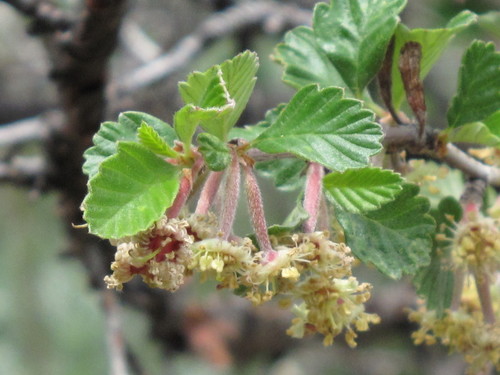
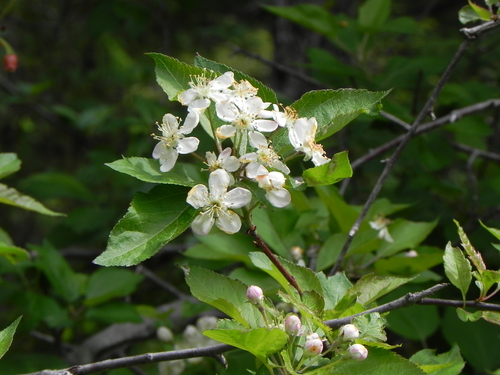
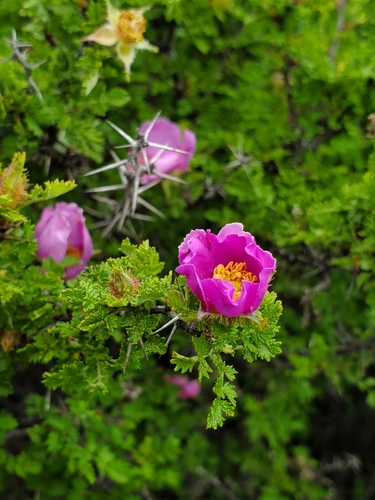
Scientific name: Rosa minutifolia Parry. This is a dense, thicket-forming perennial shrub that occurs in chaparral plant communities. It is exceptionally drought tolerant, and this tolerance is improved when a thick layer of organic mulch is applied. Under drought stress, the plant defoliates, exposing a small thicket of woody, extremely spiny stems. It reaches 30 to 100 cm (1 meter) in both height and width. Its stems are low and arching, and bear many generally unpaired, straight, slender prickles that measure 2 to 12mm in length. The leaves of Rosa minutifolia are the smallest of any species in the genus Rosa. Terminal leaflets are 3 to 6mm long and wide. Leaflets are round, widest near the middle, with an obtuse tip. Leaf margins are toothed about halfway to the midvein, and are glandless. The leaf axil is finely short-hairy and sparsely glandular. There are 5 to 7 hairy leaflets per leaf. Inflorescences are typically one-flowered. Pedicels are hairy, glandless, and measure 2 to 10mm in length. The flower hypanthium is around 3mm wide, and the densely prickly floral neck is 2mm wide. Sepals have toothed lateral lobes, are glandless, and their tip is generally about the same length as the toothed sepal body. Flowers typically contain 10 pistils each. Petals are 10 to 20mm long, and colored deep pink, pale pink, or rarely white. Flowers bloom in late winter, from February to April. R. minutifolia is the earliest flowering native rose in California. Fruit is typically spherical, around 5mm in width. Sepals persist on the fruit, and are erect to spreading. The characteristics of achenes for this species are not recorded. It is native to the chaparral plant community of northern Baja California, where wild populations still exist, and San Diego County, California, where it is now extinct in the wild. Rosa minutifolia is cultivated as an ornamental garden plant.