About Rosa californica Cham. & Schltdl.
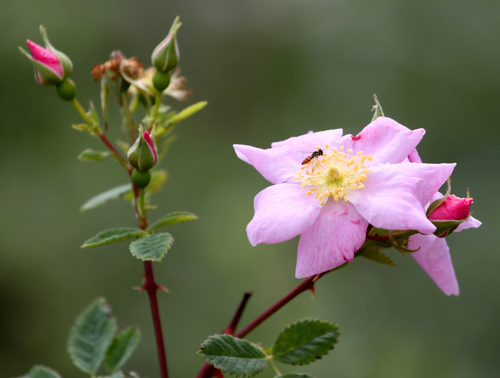
Rosa californica Cham. & Schltdl. is a bush or thicket-forming shrub with prickly, curving stems. Its fragrant flowers may grow singly or in inflorescences holding several blooms. Each open-faced rose is generally flat, with five petals that can be any shade of pink ranging from almost white to deep magenta. Its five smooth petals and sepals form a bowl-shaped bloom; the species has semi-inferior ovaries, and compound leaves that are veiny and hairy. Rosa californica produces fruit known as "rose hips", which contain yellow seeds. This species is a common native plant of California, found primarily at elevations below 6,000 feet. While it is most common in moist regions such as river banks, it can also adapt to a variety of soil textures, develop drought resistance, and has resistance to common pests and diseases. Rosa californica is used in California native gardens and habitat gardens, where it forms colonies and attracts wildlife with its bright rose hips in autumn. Hard, dry internal seeds can be extracted by hand from mature, bright red hips. This wildrose can also be propagated using stem or rhizome cuttings. It acclimates readily to new conditions. Its natural propagation helps restore damp areas, and its subterranean stems stabilize the surrounding soil. Thorny thickets provide ground cover, shelter, and even nesting sites for various organisms. The open flowers and nectar of Rosa californica attract insects and pollinators, and its extended blooming period from spring to fall provides food for local bees. Its fruits persist on the thickets through the forage-scarce winter, acting as a food source for bugs, birds, and hoofed mammals including deer and elk. The hips of this wildrose belong to the Rosaceae family, along with apricots, apples, and other roses. They are fragrant, edible, and look and taste like "small apples". Some indigenous California tribes eat the hips raw, and use the stems and fibers to make crafts such as coiled baskets, jewelry, and decoration. Other indigenous California tribes use the medicinal properties of this rose. They used a mixture of rose petals, leaves, and/or rose hips in drinks or as medicine to relieve skin inflammation, general inflammation, pain, and illness including fever, stomach pains, and sores. During World War II, rose hips were used for their high vitamin content. They are dried for use in tea, or to make jellies and sauces. The Cahuilla people eat the rose buds raw, or soak them in water to make a drink. A tea made from the roots of the plant is also used to treat colds. Because rose hips stay on the plant through the winter, they provide food for wildlife when little other forage is available.