About Rosa acicularis Lindl.
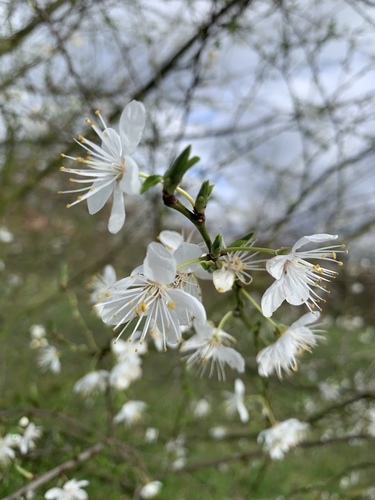
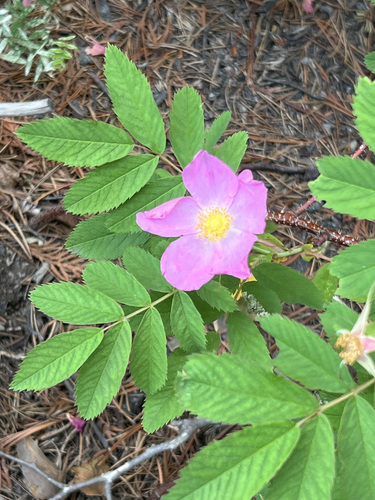
Rosa acicularis Lindl. is a deciduous shrub that grows 1–3 meters tall. Its leaves are pinnate, 7–14 cm long, and bear three to seven ovate leaflets with serrate, toothed margins. Flowers of this species are most commonly pink, and rarely white, with a diameter of 3.5–5 cm. The rose hips it produces are red, range in shape from pear-shaped to ovoid, and measure 10–15 mm in diameter. Its native habitats include thickets, stream banks, rocky bluffs, and wooded hillsides. Ploidy varies across this rose species. Botanical authorities have recorded that the North American subspecies sayi is either tetraploid or hexaploid, while the Eurasian subspecies acicularis, which grows in China, is octoploid. On the northern Great Plains, most populations of this species are generally tetraploid. Hexaploid populations are also found in the Yukon. The hips of Rosa acicularis stay on the plant through winter, and are reported to be high in vitamins A and C. Native Americans prepared tea and salad from the plant's leaves, and used its inner bark mixed with tobacco for smoking. Perfume can also be made from this plant.