About Rollandia microptera (Gould, 1868)
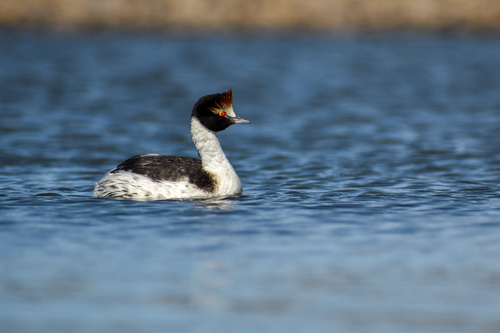
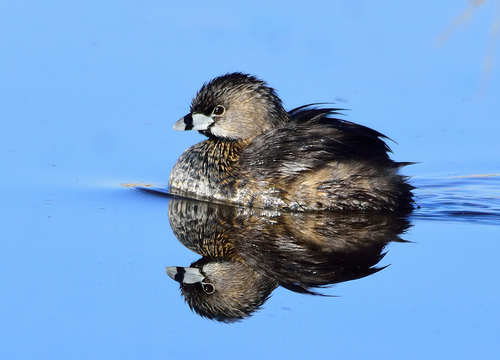
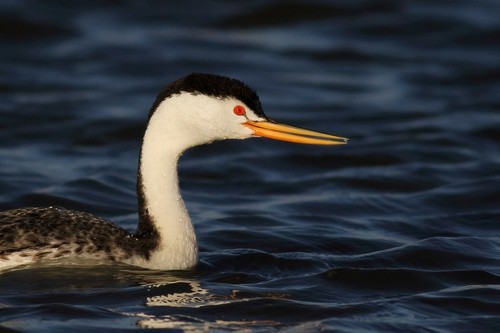
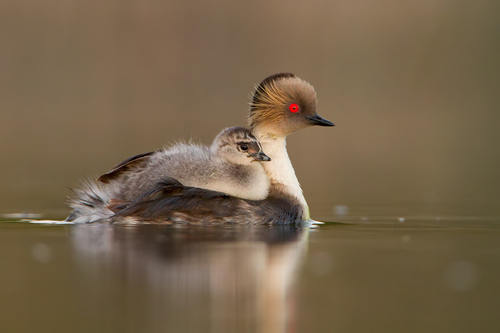
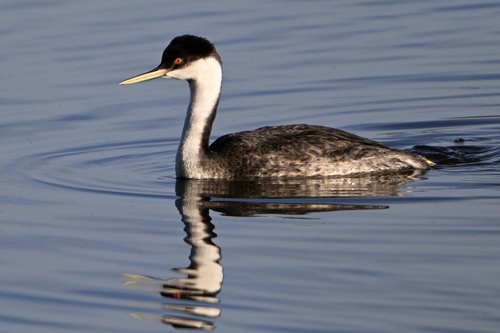
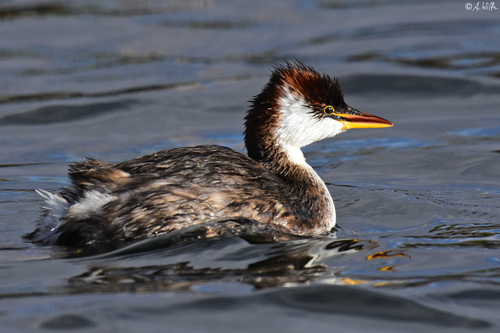
Rollandia microptera, commonly called the Titicaca flightless grebe, is a mid-sized grebe that ranges from 28 to 45 cm in total length, and weighs up to 600 g. This species has unique, unmistakable coloration. The only grebe species it somewhat resembles is the red-necked grebe, which does not occur in South America. Its only close relative in the same genus, the white-tufted grebe, does not look very similar to it. Overall, the Titicaca grebe shares a similar color pattern to the red-necked grebe, but it has a darker belly, and a white throat patch (instead of the light grey patch found in red-necked grebe) that extends down the neck almost to the breast. Due to its short wings, its rufous flanks are usually visible. The ornamental head plumes are a dark, vestigial version of the plumes found on the white-tufted grebe. The iris and lower bill are yellow. Juveniles and non-breeding adult individuals have duller coloration and lack ornamental plumes; juvenile birds additionally have rufous stripes on the sides of the head and more white on the neck, which hides the rufous breast when the bird is swimming. This grebe is entirely flightless, but it can use wing-assisted running to travel over considerable distances. It is a skilled diver, able to reach a burst speed of 3.5 km/h (2 knots). The Titicaca flightless grebe lives in a mosaic of habitats in relatively shallow waters up to around 10 m (35 ft) deep. Its breeding habitat is the reed belt, which occurs in water up to 4 m (13 ft) deep, and is dominated mainly by Totora, Schoenoplectus californicus ssp. tatora. Other plants found in its habitat include the underwater species Myriophyllum elatinoides and Hydrocharitaceae water weeds, plus floating duckweeds and Azolla. Potamogeton forms the dominant underwater vegetation in deeper areas, down to 14 m (around 45 ft). A study by O'Donnel and Fjeldsa concluded that these grebes are strongly impacted by environmental change and are sensitive to it. It is likely that every territorial pair attempts to breed once per year. The period that parents spend caring for their young is probably quite prolonged, and the species may not have a fixed breeding season. Young birds generally become independent before they reach one year of age. Clutches usually contain 2 eggs, but may have as many as 4. While more birds are found incubating around December than at other times of year, roughly half of the adult population is breeding or caring for young at any given time.