About Risoba obstructa Moore, 1881
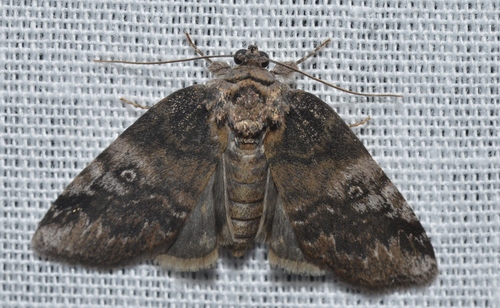
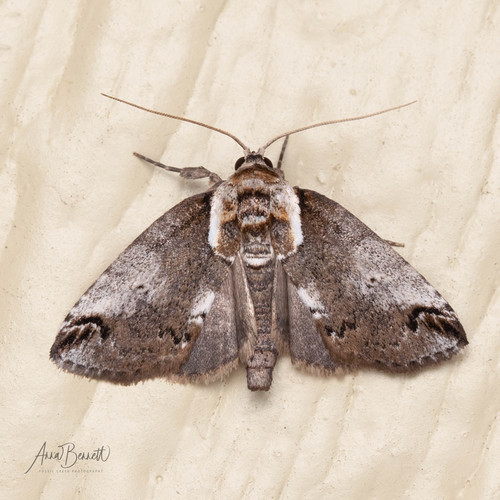
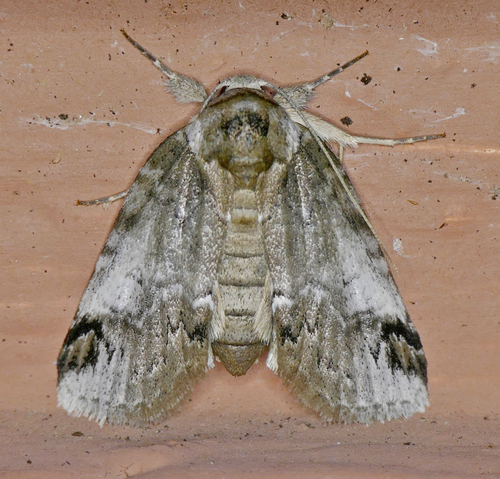
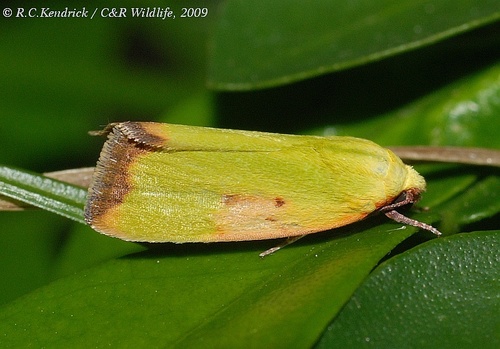
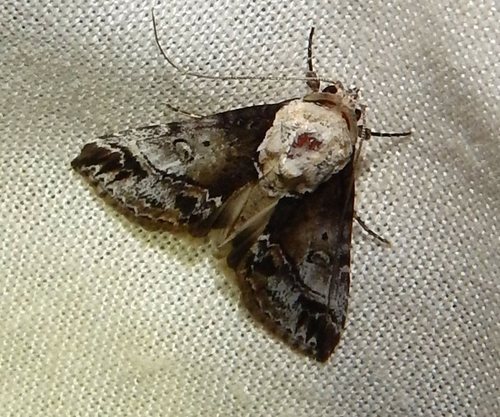
Risoba obstructa Moore, 1881 has a wingspan ranging from approximately 28 to 36 mm. The head and thorax are brown, while the tegulae are whitish. The forewings are whitish and sprinkled with brown. They feature an oblique white basal band, with a red-brown costal area just beyond this band. The reniform spot is round, with a dark speck located at its center. There is an oblique, double postmedial line that is slightly incurved below vein 4; the area beyond this line is red brown, with faint traces of a sub-marginal waved line. Several dark apical specks are visible, along with a series of alternating marginal brown and white specks. The hindwings are semihyaline white, with a broad brown marginal band. The larva is purplish brown with pale-colored sides. It has dorsal and lateral lines speckled with white, and a series of whitish sub-basal streaks. A series of black dots occurs between the lateral and sub-lateral lines, and there is a conical prominence on the anal somite. This species is distributed across the region stretching from Sri Lanka and India to the Philippines, Solomon Islands, and Australia. The larva of Risoba obstructa has been recorded feeding on plant species from the genera Quisqualis, Terminalia, Xylia, Lagerstroemia, and Sterculia.