About Rictaxis punctocaelatus (P.P.Carpenter, 1864)
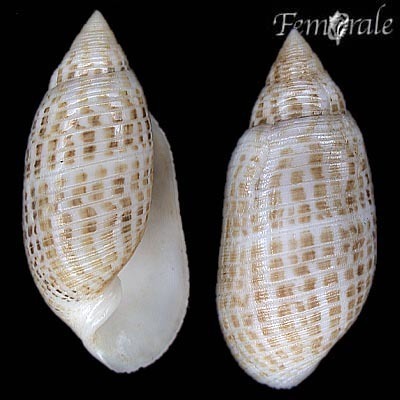
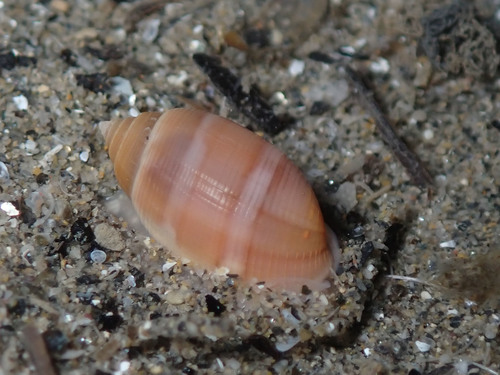
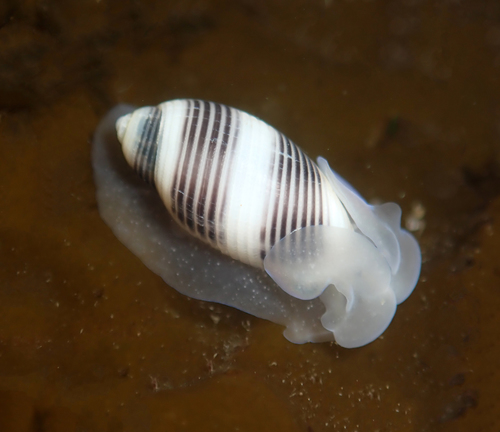
This species of sea snail has the scientific name Rictaxis punctocaelatus, first described by P.P. Carpenter in 1864. The shell of this species reaches a maximum length of 10 mm, with a diameter of 4.5 mm. The shell is oblong in shape, with a large, conoidal spire. It is white in base color, marked by two alternating broad zones that are ashy or brown. The outer lip of the aperture and the columellar folds of the shell are whitish. The shell is made up of five convex whorls, separated by impressed, narrowly channelled sutures. The entire shell surface is sculpted with equidistant spiral grooves that are noticeably punctate. The raised intervals between these grooves are mostly smooth, except for a fine engraved line running along the middle of each interval. Around 26 of these grooves are present on the body whorl. The length of the aperture accounts for two-fifths to two-thirds of the total length of the shell. The ovate columella is strongly twisted, with a spiral fold positioned near its top, and is obliquely truncated at its base. The base of the whole shell is rounded. This marine species is found in the Pacific Ocean off the western coasts of Canada, the United States, and Mexico; it also occurs in the Atlantic Ocean off the coast of Brazil. Fossil specimens of this species have been recovered from Pliocene geological strata located in San Diego Bay.