About Ricciocarpos natans (L.) Corda
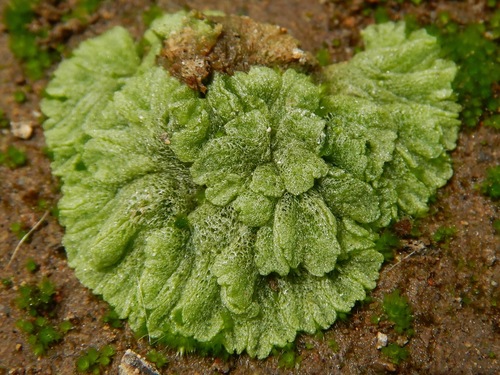
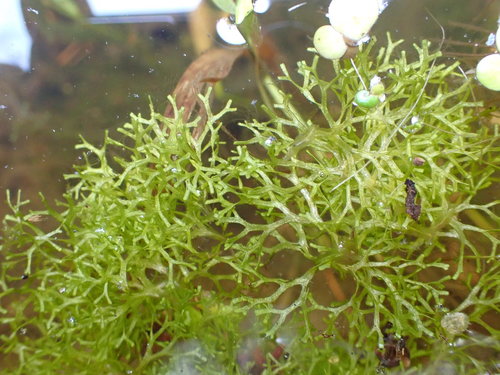
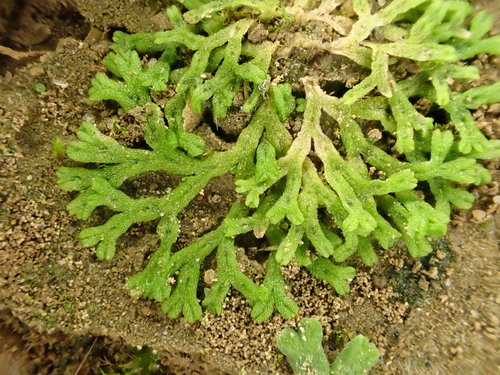
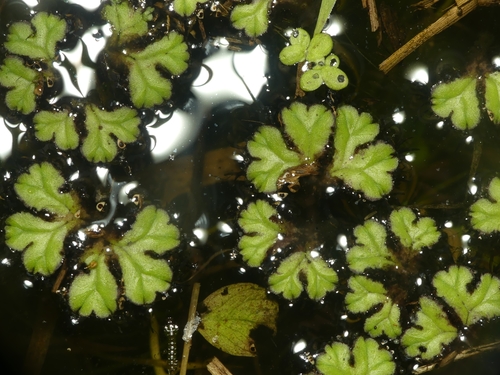
Ricciocarpos natans, commonly known as fringed heartwort, is the only species in the genus Ricciocarpos, a group of liverworts belonging to the family Ricciaceae. In 1759, Linnaeus originally classified this species as a member of the genus Riccia. In 1829, August Carl Joseph Corda reclassified it into its own separate, new genus. While Ricciocarpos natans shares many common features with the genus Riccia, its most distinct difference is the long, sword-shaped purple scales that hang from the underside of floating plants. The genus has sometimes been published in literature under the alternative spelling Ricciocarpus, but the original spelling with an o is the currently accepted version. The species epithet "natans" derives from the Latin word for swimming, which refers to this plant's typical habit of floating freely in ponds and still waters. R. natans grows two drastically different forms based on its growing conditions: a terrestrial form for plants growing on land, and an aquatic form for plants floating in water. The terrestrial form grows into rosettes 25–35 millimetres across, made up of short, narrow branches with nearly parallel sides. The more common aquatic form grows as a broader, heart-shaped thallus with fewer branches, and has long, slender purple scales hanging from its underside. The two forms are so distinct in appearance that they were originally classified as separate species. Ricciocarpos has a global distribution, found nearly everywhere on Earth except polar regions, though it is rare in parts of the tropics. It can form large, extensive floating colonies in quiet waters, and grows easily in laboratory cultures. While fertile specimens of R. natans are not unheard of, mature plants that produce spore capsules are rarely encountered. Because of this rarity, it is generally assumed that R. natans spreads primarily via vegetative reproduction when existing plants break apart. Some sources suggest that aquatic forms remain sterile, and that sexual reproduction is mostly restricted to terrestrial forms, but other sources state that even terrestrial forms are typically sterile.