About Ribes lacustre (Pers.) Poir.
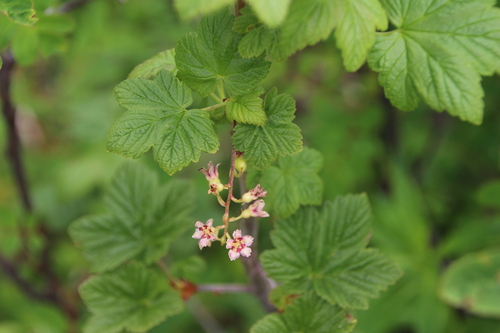
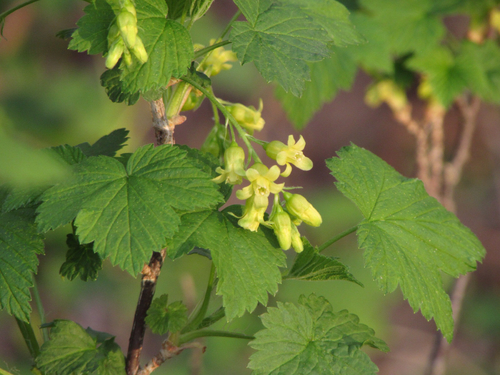
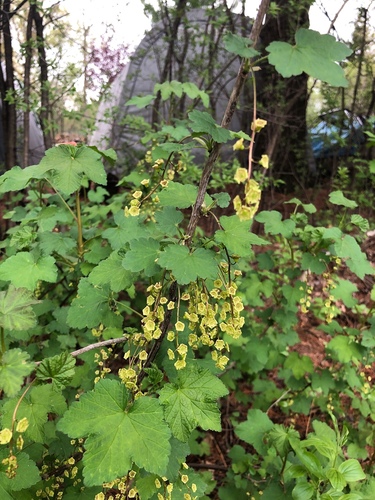
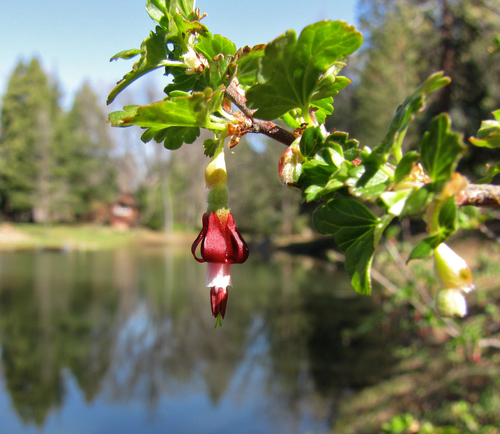
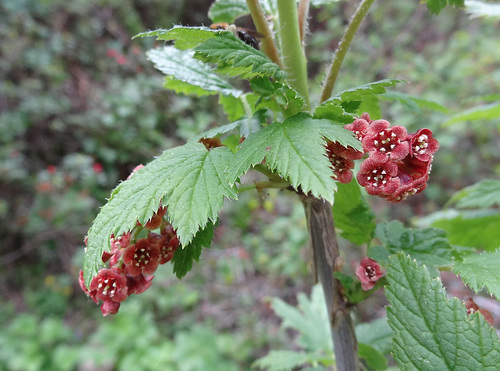
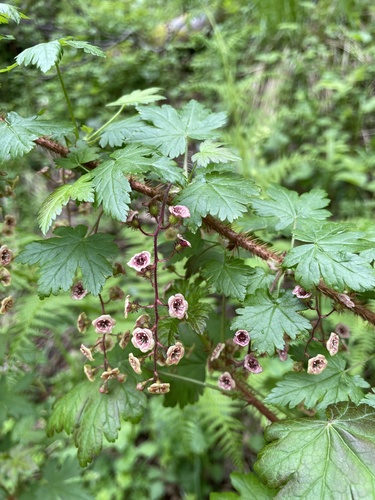
Ribes lacustre (Pers.) Poir. is a deciduous shrub that grows from erect to spreading, reaching 0.5 to 2 metres (1 1/2 to 6 1/2 feet) in height. Its alternately arranged palmate leaves are 2.5 to 5 centimetres (1 to 2 inches) wide, and typically have 5 deeply indented lobes and a heart-shaped base. Leaf margins are toothed, and the upper leaf surface is dark and glossy green. Clusters of reddish to maroon flowers bloom between April and August. Hanging racemes hold 5 to 15 pink disk-shaped flowers, and grow from stems covered with short hairs and bristles, with larger thick spines located at the leaf nodes. The bark of older stems is cinnamon-colored. The plant produces dark purple berries that are 6 to 8 millimetres (1/4 to 5/16 inch) long. This species has a wide distribution across North America: it ranges from California north to Alaska, extends east across the continent to Pennsylvania and Newfoundland, and reaches south as far as New Mexico. It can grow from low-elevation forests and swamps up to subalpine elevations. The berries of this prickly currant are eaten by rodents, bears, birds, mountain goats, elk, mule deer, and white-tailed deer. The shrub provides cover for birds and small mammals. Most indigenous peoples of the Pacific Northwest Coast ate its berries, though the Sechelt considered the berries poisonous. Ripe berries were eaten fresh, but were not collected for storage because of their small size and low abundance. Some indigenous groups believed the plant's spines held special protective powers against snakes and evil influences, similar to the spines of Devil's club.