About Ribes hudsonianum Richardson
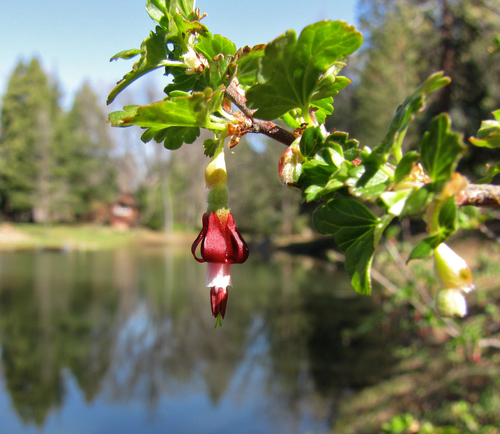
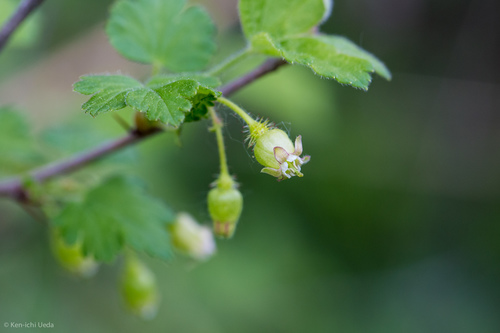
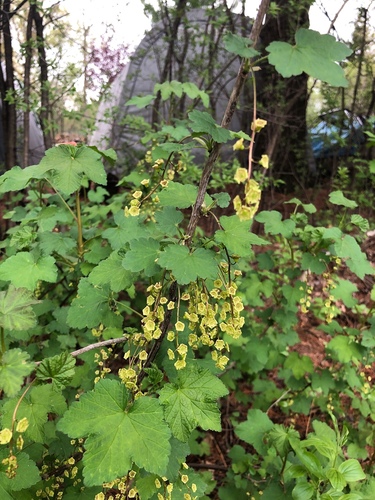
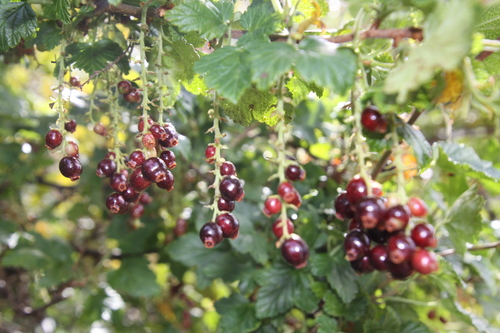
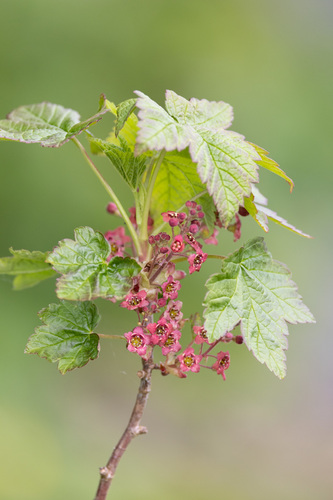
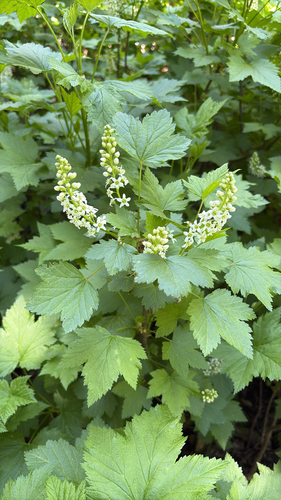
Ribes hudsonianum Richardson is an aromatic shrub with a generally unpleasant strong scent. This species grows as an upright to erect shrub, reaching 0.5 to 2 metres (1+1⁄2 to 6+1⁄2 ft) in height. It typically inhabits moist wooded areas, including mountain streambanks and swamp thickets, and can also be found in rocky locations and humid forests from montane to subalpine elevations. Its stems are covered in shiny yellow resin glands, and have no spines or prickles. The leaves are 2.5 to 12.5 centimetres (1 to 5 in) long, divided into five sharp-toothed lobes, with the two lower lobes being smaller. The undersides of the leaves bear long hairs and are dotted with yellow glands. Its inflorescences are erect, spikelike racemes that hold up to 50 flowers. Each flower is roughly tubular, with spreading whitish sepals that enclose smaller whitish petals inside. It produces bitter-tasting black berries about 1 cm (3⁄8 in) wide, with a waxy surface speckled with yellow glands. This species has two varieties. Both varieties occur together only in British Columbia, Idaho, and Washington. The common name Hudson Bay currant refers to the variety that grows across every Canadian province from Quebec westward, and in parts of the United States including Alaska, the Great Lakes region, the northern Rockies, Cascades, Blue Mountains, and other areas of the Northwest. The western black currant variety occurs in British Columbia, and is distributed primarily across the western United States: Wyoming, Montana, Idaho, Washington, Oregon, northern Nevada, northern California, and Utah. The berries of this plant are bitter but edible.