About Ribes curvatum Small
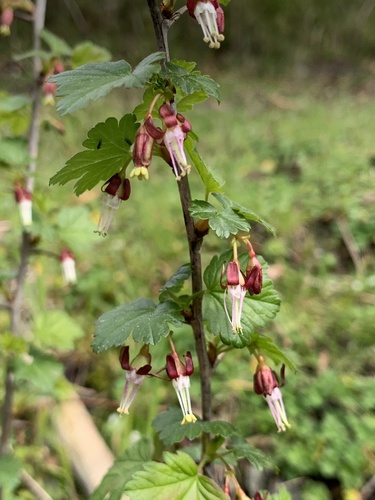
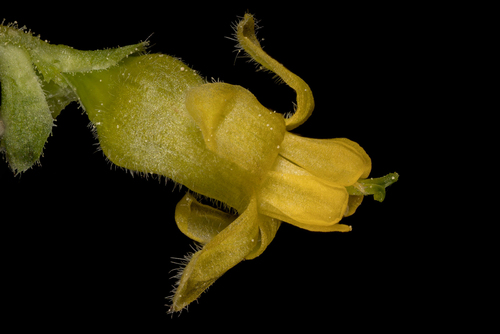
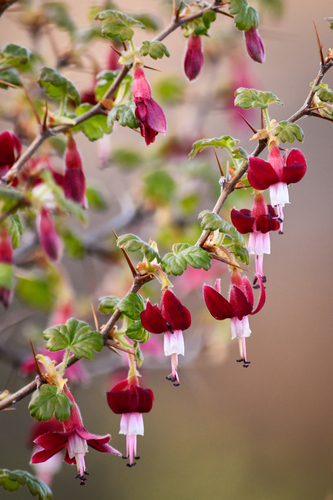
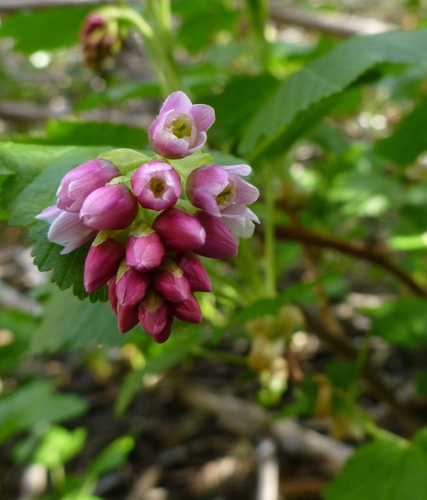
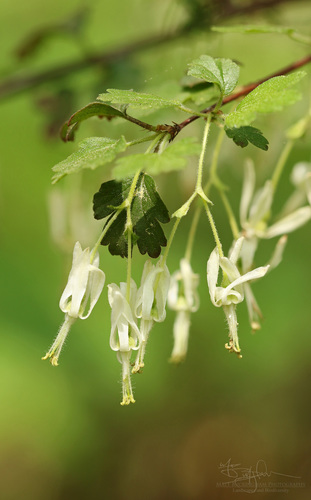
Ribes curvatum Small, commonly called granite gooseberry, drooping gooseberry, and Georgia gooseberry, is a North American currant species. It is native to the southeastern and south-central United States, where it occurs in Texas, Oklahoma, Louisiana, Arkansas, Tennessee, Georgia, and Alabama. It can grow in a range of habitats from dry rocky slopes to rich woodlands. This is a deciduous shrub that reaches up to 3 meters (9.8 feet) tall, and most often grows between 1 and 1.7 meters (3.3–5.6 feet) tall. Its stems are either erect or recurving, and have three reddish-brown spines at each node. Stems often root at their tips. Leaves are alternate, petiolate, and marked with three rounded lobes. Flowering occurs between March and May. The flowers are white with prominent stamens, carry a strong clove-like scent, and may grow alone or in racemes holding 2 to 4 flowers. Each flower has a bell-shaped hypanthium covered in scattered hairs. Flower sepals are white, separated, and spreading apart from each other, while petals are also white and separated, but stay in close contact. The plant produces berry fruits that ripen in July. The berries are globular, typically 7-8mm in diameter, though they have been reported to grow as large as 12mm. They are green or reddish-purple, and may be crowned by persistent stamens. Each berry holds many seeds inside. Birds and small mammals eat these berries. Humans can also eat the berries raw or cooked, and they are sometimes used to make preserves. Their taste is similar to that of an acidic gooseberry.