About Ribes cereum Douglas
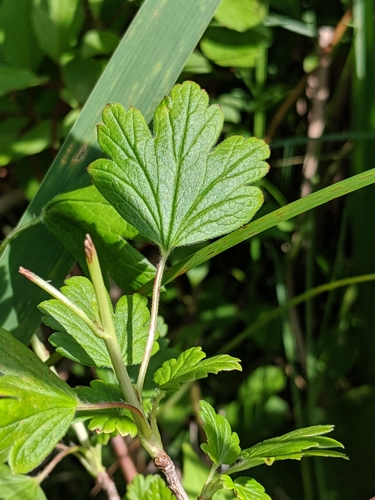
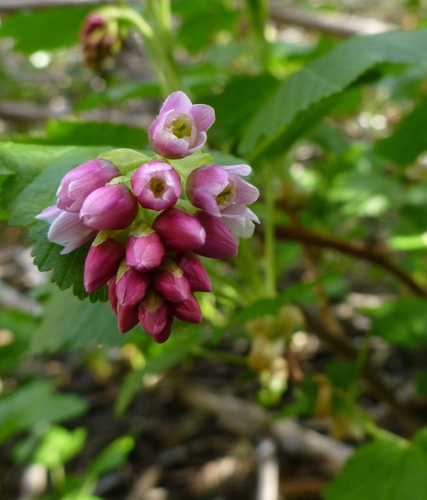
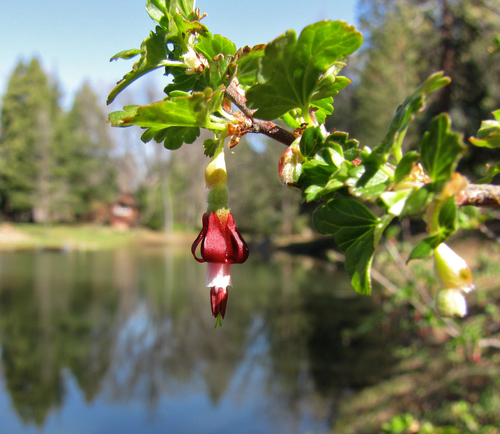
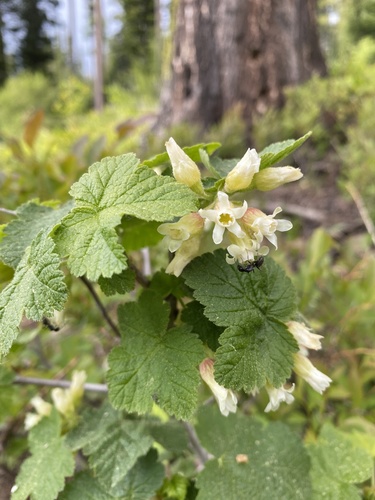
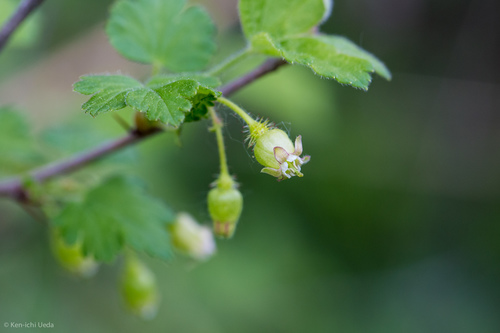
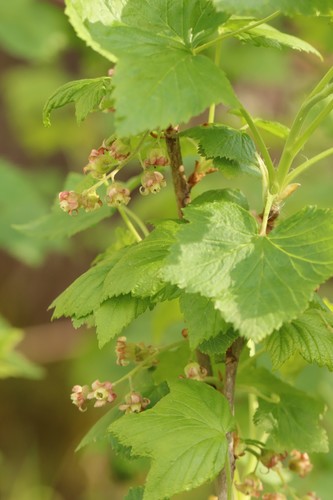
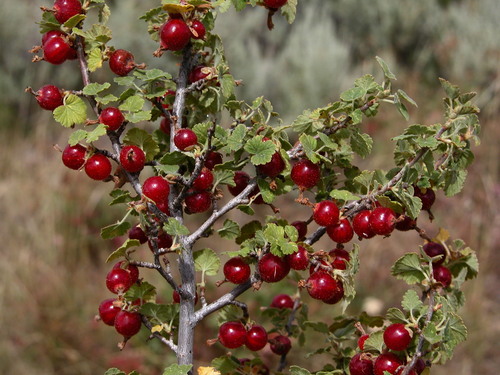
Ribes cereum Douglas is a spreading or erect shrub that reaches heights between 20 centimetres (8 inches) and 2 metres (6+1⁄2 feet). Its stems are fuzzy, often very glandular, and have no spines or prickles. The gray-green leaves are 1.5–2.5 centimetres (1⁄2–1 inch) long, somewhat rounded, and divided into 3–5 shallow, toothed lobes along the edges. Leaves range from hairless to quite hairy, and are usually dotted with visible resin glands, especially around the edges. The inflorescence is a clustered raceme holding 2 to 9 flowers. Each small flower is tubular, with white to pink sepals that curl open at the tips to form a corolla-like structure. Inside the flower are tiny white or pinkish petals, five stamens, and two protruding green styles. The fruit is an orange-red berry up to 1 centimetre (3⁄8 inch) wide, which is rather tasteless, and has a distinctive long dried flower remnant at its end. The plant is aromatic with a spicy scent, and the hairs covering much of its surface can produce a carrion-like odor. This species is native to western North America, occurring in British Columbia, Alberta, and much of the western United States, ranging from Washington, Oregon, and California east to the western Dakotas and the Oklahoma Panhandle. It grows in multiple habitat types, including alpine mountain forests, sagebrush, and woodlands. It can grow in many different soil types, such as sandy soils, clay-substrate soils, serpentine soils, and lava beds. The berries are an important food source for deer, and are eaten by other animals. Some Native American tribes have eaten the berries. The Zuni people consume the berries of the pedicellare variety, and also eat the leaves with uncooked mutton fat or deer fat. One field guide notes that the berries are somewhat toxic, have an unpleasant flavor, and eating too many may cause a burning sensation in the throat. Another source states that ripe berries are good, and can be processed into jam or pie fillings.