About Ribes aureum Pursh
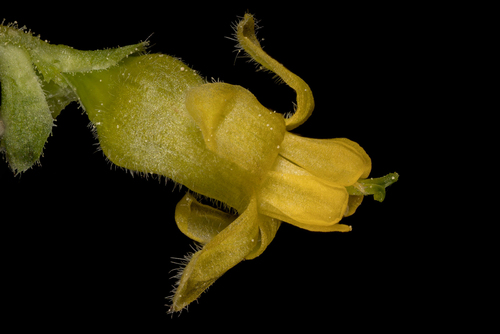
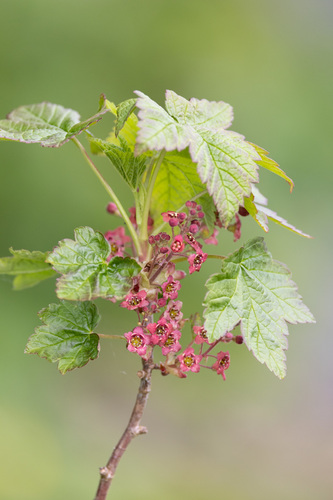
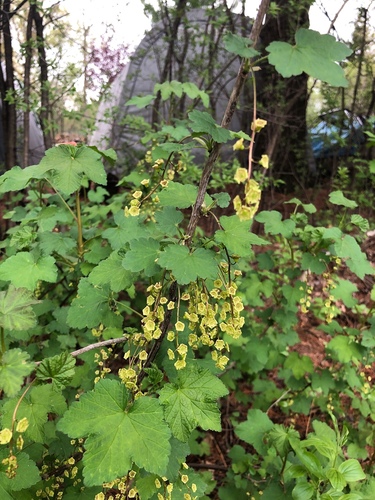
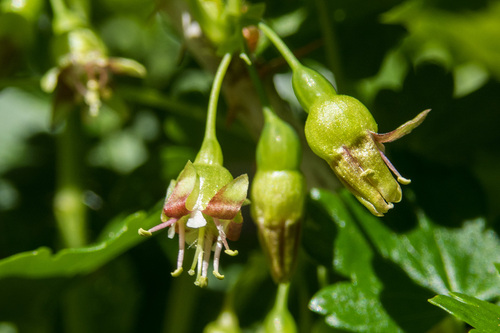
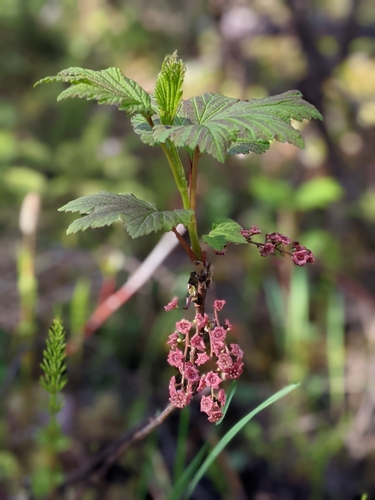
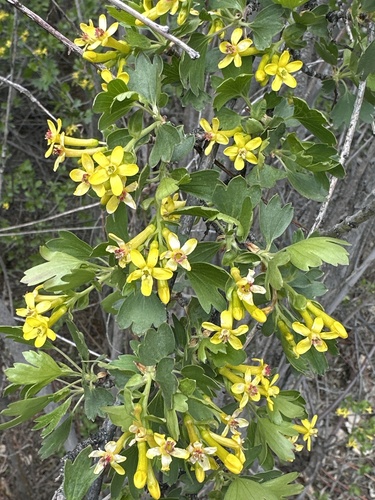
Ribes aureum Pursh is a small to medium-sized deciduous shrub that grows 2–3 metres (6+1⁄2–10 feet) tall. Its leaves are 1.5–4 centimetres (1⁄2–1+1⁄2 inches) long, green, semi-leathery, and have 3 or 5 lobes; they turn red in autumn. The plant blooms in spring, producing racemes of prominent golden yellow flowers that often carry a strong spicy fragrance similar to cloves or vanilla. Flowers can also range in shade from cream to reddish, and grow in clusters of up to 18 individual flowers. This shrub produces berries around 1 centimetre (3⁄8 inch) in diameter starting from an early age. Ripe fruits range in color from amber yellow to black, and fruits of the variety villosum are always black. Ribes aureum is native to Canada and the central United States west of the Mississippi River, but it has escaped cultivation and become naturalized in the eastern United States. It can be found growing on gravel banks and plains near flowing water. Pollinators that visit this plant include hummingbirds, butterflies, and bees. Its fruit is eaten by a variety of birds and mammals. This currant species is susceptible to white pine blister rust, the fungus Cronartium ribicola that attacks and kills pines, so it is sometimes removed from forested areas where the fungus is active to stop the spread of the disease. R. aureum is widely cultivated as an ornamental plant for use in traditional gardens, native plant gardens, drought-tolerant gardens, wildlife gardens, and natural landscaping projects. Named cultivars of the species have also been introduced. Although the flowers are hermaphroditic, fruit yield benefits greatly from cross-pollination. The fruits are edible raw, but they are very tart or bitter. They are usually cooked with sugar and can be processed into jelly. The flowers are also edible. Various Native American groups across the plant’s North American range have used the berries for food, and other parts of the plant for medicine.