About Rhyzopertha dominica (Fabricius, 1792)
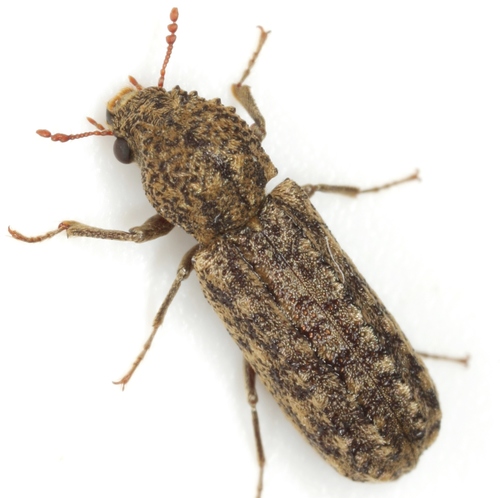
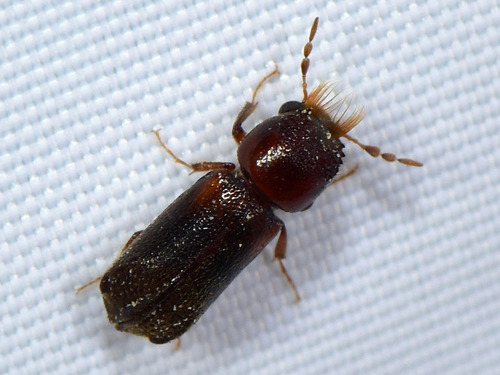
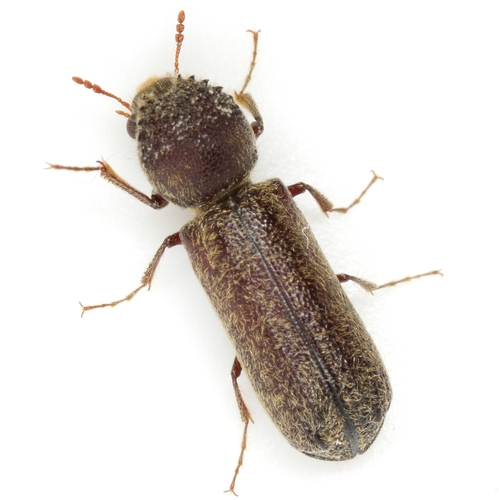
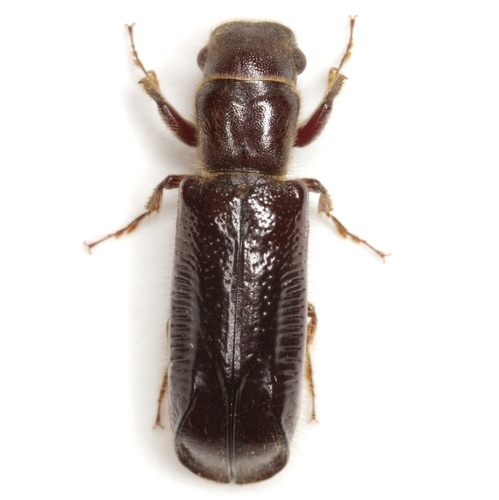
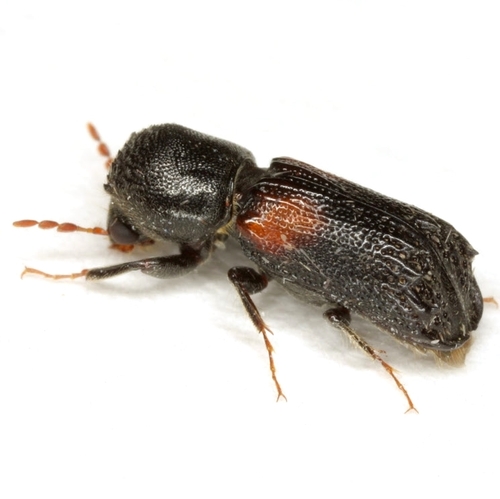
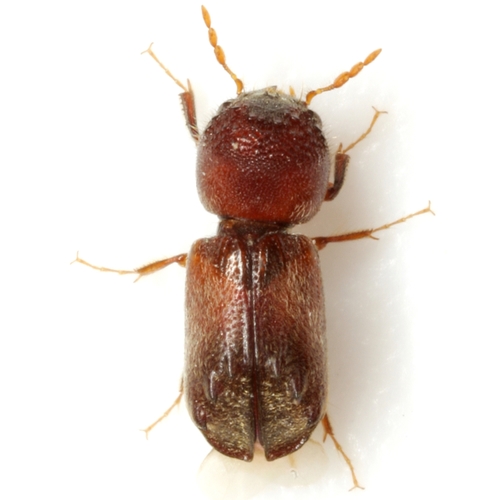
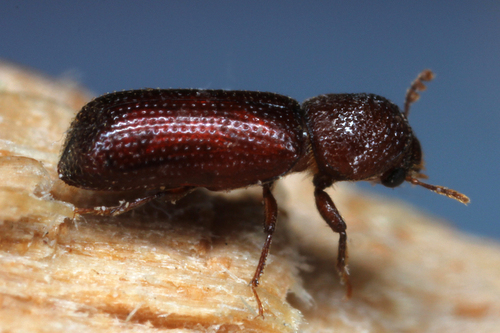
Identification: Average adult Rhyzopertha dominica measure 2.1–3.0 millimetres (11⁄128–15⁄128 in) in length. Their bodies are reddish brown, with 11 antennal segments and a 3-segmented antennal club. The pronotum sits near the base of the body and has no depressions; its basal portion has a wrinkled texture. Distinct tubercles are present on the pronotum's anterior margin, with a small gap between the tubercles at the median. This species has distinct elytral strioles that are angularly rounded at the apex, along with short, yellowish, bent setae. There are no major externally visible differences between adult male and female R. dominica, though a minor reported difference is in the last ventral abdominal sternite: this segment is pale yellow in females, while it is uniformly brown in males. Rhyzopertha dominica is superficially similar in morphology to other species in the family Bostrichidae, especially species in the subfamily Dinoderinae.
Distribution and diversity: The geographical origin of R. dominica remains uncertain, but the scientific community generally agrees the Indian subcontinent is its most likely native range, as this region is home to multiple other bostrichid species. Today, R. dominica has a worldwide distribution, concentrated primarily in warmer temperate climate zones between 40° North and 40° South latitude. It is found most often in forested areas and grain storage environments. Human activity has helped the species spread widely via commercial grain transportation. Its common habit of infesting wheat in Australia has earned it the alternate common name "Australian Wheat Weevil".
Courtship behaviour and reproduction: Rhyzopertha dominica has a four-stage life cycle: egg, larval, pupal, and adult. Mating occurs within 24 hours after an adult emerges from the pupal stage. Females do not perform any courtship behavior, including initiating mating or attempting to attract males. Males sometimes attempt to mate with other males, while this type of interaction never occurs between females. Females are attracted to males after physical contact, when close proximity allows their olfactory senses to detect pheromones produced by males. These male-produced pheromones also attract other males. In both male-to-male and male-to-female interactions, pheromone stimulation produces an excited, rapid walking pattern, with the head, thorax, and antennae extended forward and upward toward the source of the pheromone. When near a pheromone source, beetles walk with their antennae extended and actively palpate the abdominal area of other beetles. Males initiate a palp-mediated mating response and will mount another beetle if it is female, after touching the tips of the female's elytra with their maxillary palp. When mounting, the male moves to the female's posterior dorsal surface, walks forward, and taps lightly on top of the female's elytra and thorax with his palpi. The male lowers his last abdominal sternite to extend his aedeagus into the female's vagina, establishing genital contact. Copulation is achieved once the male is firmly mounted. Copulation lasts for 2 hours, and can occur multiple times during the lifespan of R. dominica, as females require more than one mating to effectively fertilize all eggs they will produce over their lifetime.