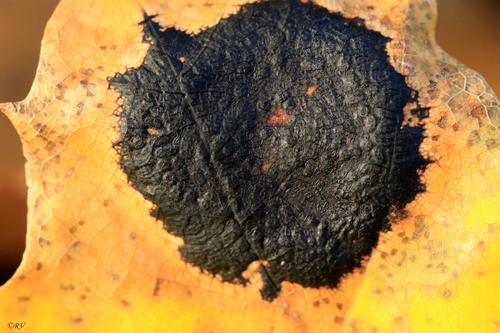
About Rhytisma acerinum (Pers.) Fr.
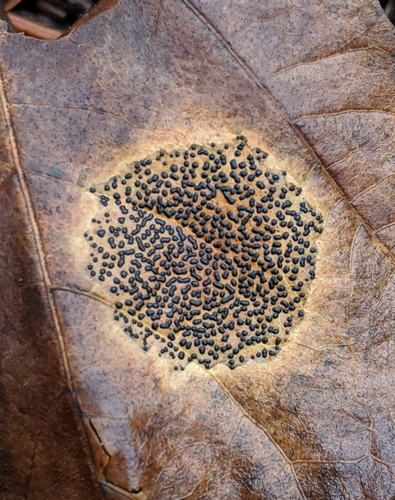
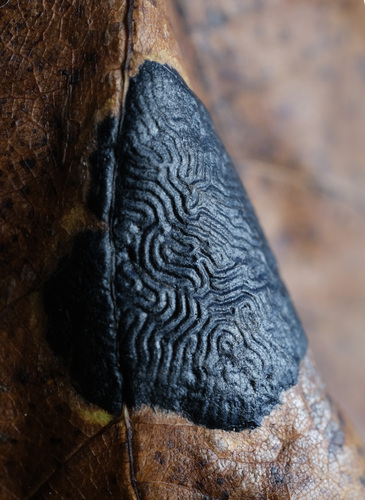
Rhytisma acerinum (Pers.) Fr. is an Ascomycete fungus that acts as a plant pathogen and biotrophic parasite. It commonly infects the leaves of sycamores and maples during late summer and autumn, causing the disease known as tar spot. Tar spot is generally a cosmetic condition that does not harm the long-term health of infected trees, so it is usually controlled only through sanitation methods. Tar spot caused by R. acerinum is most commonly found in Europe and North America. It was once thought to be a useful pollution indicator, as the fungus was not found in areas with high sulfur dioxide levels. Laboratory studies confirm sulfur dioxide is toxic to R. acerinum, preventing stromata from causing new infections, but no correlation has been found between general pollution levels and the presence of the disease. The absence of tar spot in urban areas actually stems from the increased removal of fallen infected leaves via sweeping, which eliminates the source of new infections. The disease appears in summer, particularly during wet periods, but can also develop through drier seasons.