About Rhyssa persuasoria (Linnaeus, 1758)
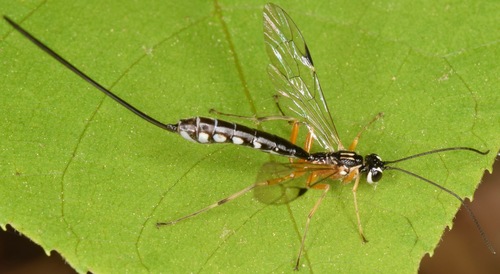
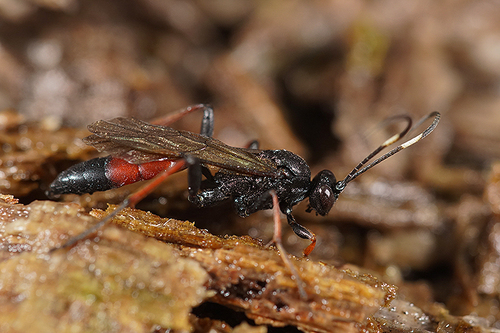
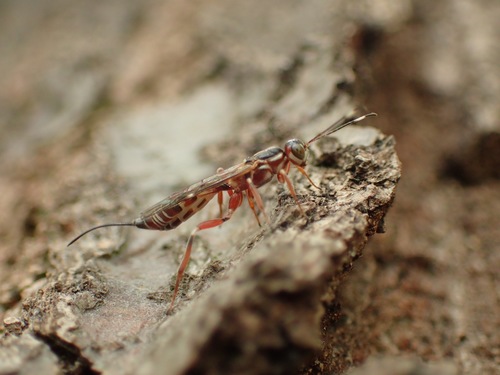
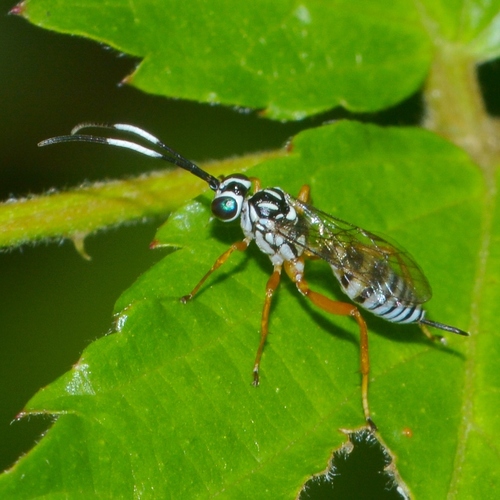
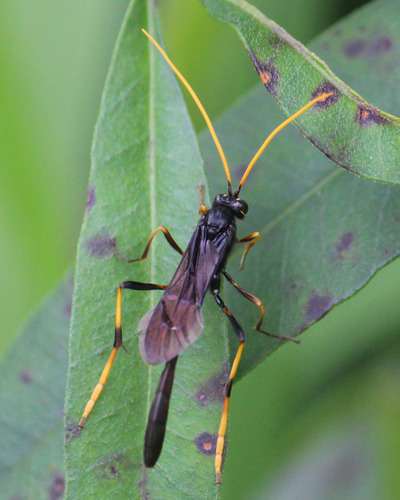
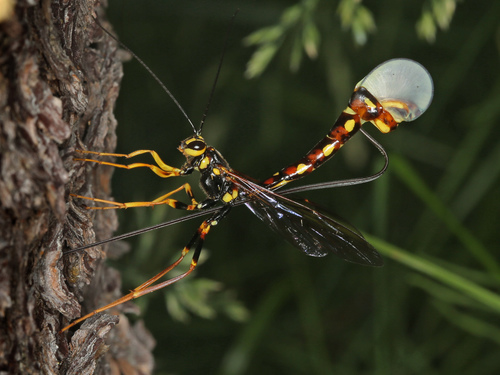
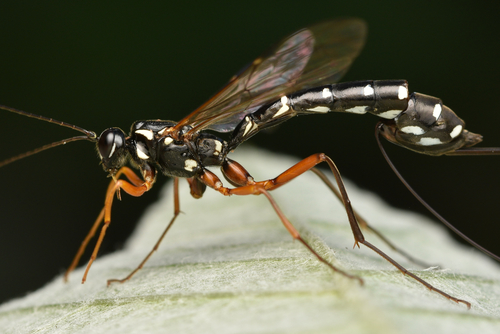
Rhyssa persuasoria, described by Linnaeus in 1758, is one of the largest ichneumon wasps found in Europe. Adult body length varies by sex: males reach approximately 10–20 millimetres (0.39–0.79 in), while females reach 20–40 millimetres (0.79–1.57 in), not including their ovipositor which measures an additional 20–40 millimetres (0.79–1.57 in). The ovipositor of females is longer than their entire body, and they use it to lay eggs. These ichneumon wasps have a thin black body, multiple whitish spots on the head, thorax, and abdomen, and reddish legs. Their antennae are long and thin. This species is quite similar in appearance to Rhyssa amoena Gravenhorst, 1829. Rhyssa persuasoria is widespread across most of Europe, with recorded presence in Austria, Belgium, Great Britain, Russia, Czech Republic, European Turkey, Finland, France, Germany, Greece, Hungary, Iceland, Ireland, Italy, Latvia, Lithuania, Norway, Poland, Portugal, Romania, Slovakia, Spain, Sweden, Switzerland, The Netherlands, and Yugoslavia. It can also be found in the Australasian realm, the Near East, the Nearctic realm, North Africa, and the Indomalayan realm. These wasps typically inhabit coniferous or mixed woodland.