About Rhus lanceolata (A.Gray) Britton
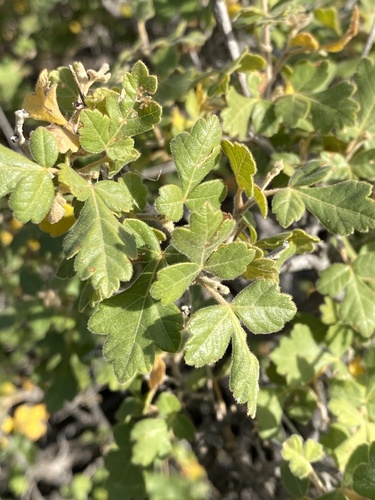
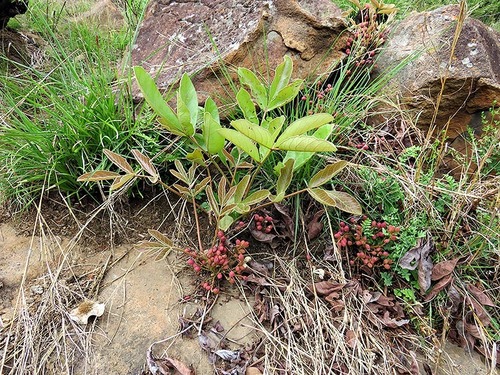
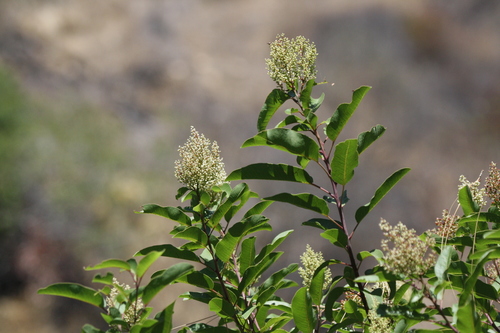
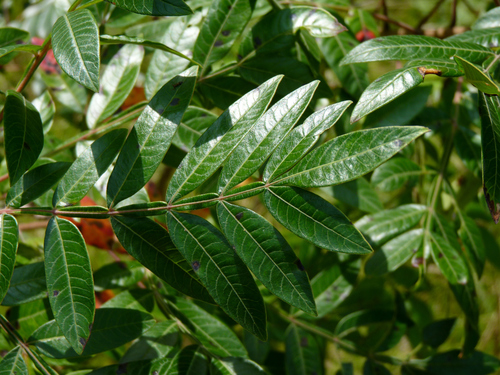
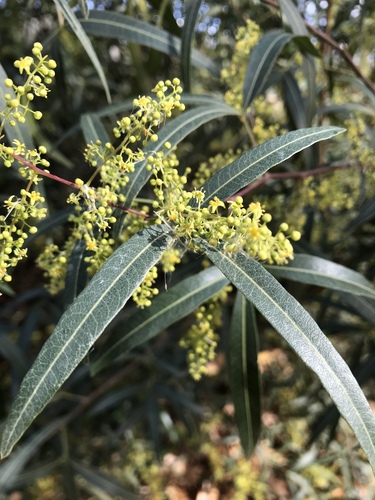
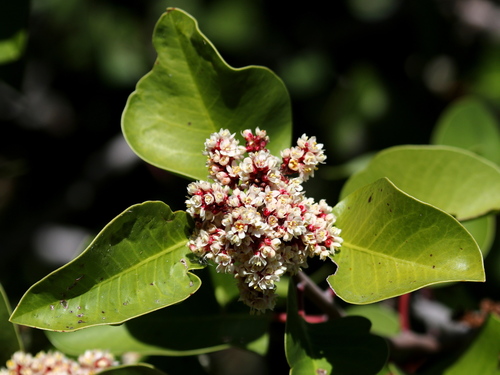
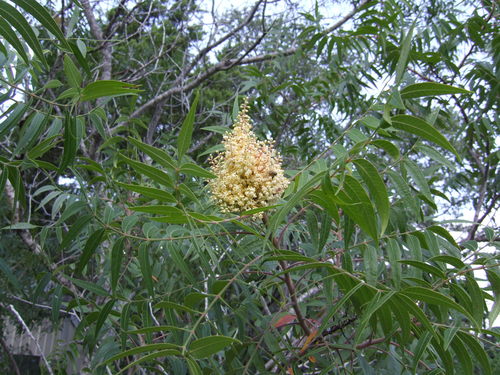
Rhus lanceolata, commonly known as prairie sumac, is a plant species native to the southwestern United States (Texas, Oklahoma, Arizona, New Mexico) and northern Mexico (Coahuila, Nuevo León, and Tamaulipas). It grows as a shrub or small tree reaching up to 9 meters (30 feet) in height, and reproduces via underground rhizomes. Its leaves are pinnately compound, with 13 to 17 lanceolate leaflets and a winged rachis. Leaflets are either entire (untoothed) or bear small teeth; they are green and shiny on the upper surface, and whitish and pubescent on the lower surface. Flowers are produced in panicles that grow up to 14 cm (5.6 inches) tall, and the flowers themselves range in color from white to greenish. The fruits are lens-shaped, roughly 6 mm (0.25 inches) across, dark red, and covered in hairs. In terms of uses, birds eat the fruit of this species during winter, and deer forage on its foliage. Its tannin-containing leaves have been used to tan leather.