About Rhododendron ferrugineum L.
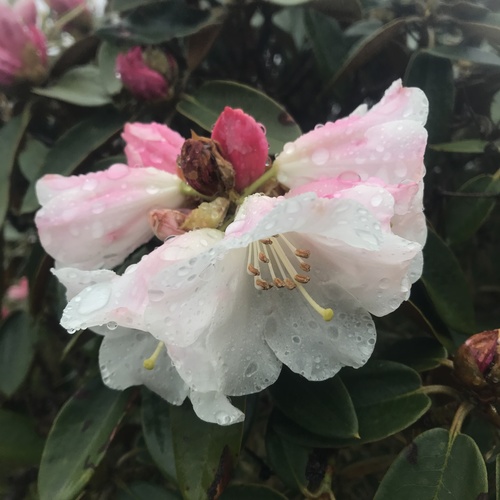
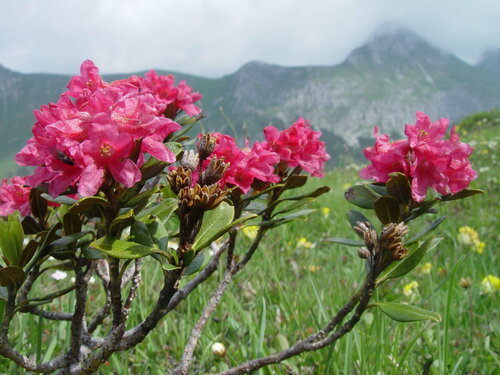
Rhododendron ferrugineum L. can grow up to 1.5 m (4.9 ft) tall, and produces clusters of pinkish-red, bell-shaped flowers all summer long. The undersides of its leaves are covered in rust-brown spots, which give the species the specific epithet ferrugineum — a Latin word meaning 'rust-coloured, ferruginous'. This species differs from the related Rhododendron hirsutum, which lacks this brown leaf colouring, has hairy leaf edges, and grows over limestone. Where the two species grow together (usually on soils with intermediate pH), the hybrid Rhododendron × intermedium can form; as its name indicates, it has an intermediate form between its two parent species. Rhododendron ferrugineum grows primarily on acidic siliceous soils, while its close relative Rhododendron hirsutum grows on basic, carbonate-rich soils. These two soil types are often found close to one another in the Alps. Rhododendron ferrugineum is moderately toxic; it contains arbutin, arecoline and rhodoxanthin. Consumption of this plant can cause vomiting, as well as functional issues of the digestive, nervous, respiratory and circulatory systems.