About Rhodeus amarus (Bloch, 1782)
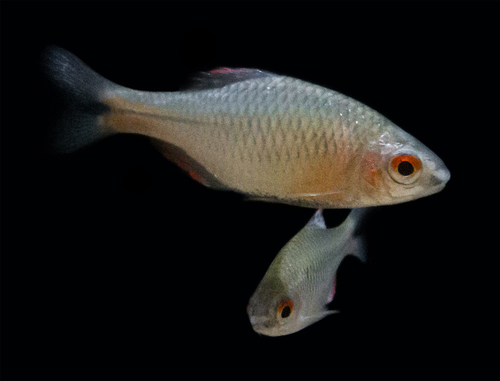
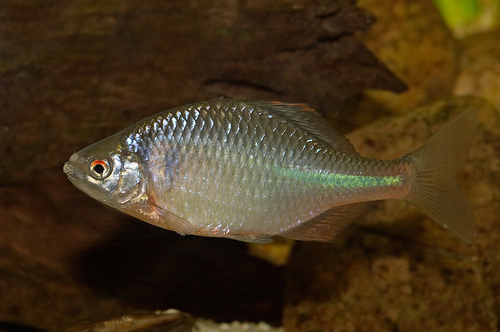
The European bitterling, Rhodeus amarus, is a temperate freshwater ray-finned fish that is part of the bitterling family Acheilognathidae. It is native to Europe, with a range that extends from the Rhone River basin in France to the Neva River in Russia. It was first described under the name Cyprinus amarus by Marcus Elieser Bloch in 1782, and has also been called Rhodeus sericeus amarus in scientific literature. Within its native range, where it is the only species in the genus Rhodeus, it is often referred to simply as "the bitterling"—this name is also sometimes used this way in scientific writing, but the usage is technically incorrect. It is a leftover from when European bitterling was grouped with its Siberian relative, the Amur bitterling, under the species R. sericeus. In general, the term "bitterling" can correctly refer to any species in the genera Acheilognathus or Rhodeus. European bitterling grow to a maximum length of 10 cm (4 in). They live among aquatic plants over sandy and muddy bottoms in shallow water. Their diet is made up mainly of plants, with smaller amounts of worms, crustaceans, and insect larvae. This fish species was once used to perform human pregnancy tests. For these tests, female European bitterling were injected with urine from the woman being tested. If the woman was pregnant, hormones in her urine would trigger the fish's ovipositors to protrude. European bitterling spawn in clear, slow-flowing or still water that often has a muddy bottom. Females lay their eggs inside freshwater mussels. Males release sperm into the inhalent current created by the respiring mussel, which fertilizes the eggs. The young hatch and stay protected inside the mussel for around one month, before leaving as actively swimming larvae. Both males and females reach sexual maturity at one year of age, when they are between 30 and 35 mm (1.2 to 1.4 in) long.