About Rhizopogon occidentalis Zeller & C.W.Dodge
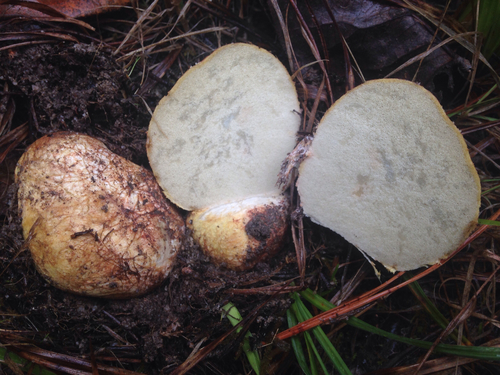
The dried fruiting bodies (basidiocarps) of Rhizopogon occidentalis are truffle-like, measure 1–4 centimetres (1⁄2–1+1⁄2 in) in diameter, and have a 60–240 μm-thick yellow peridium and a pale yellow gleba. These structures stain reddish when injured. Its basidia are club-shaped (clavate) and produce 6 or 8 spores per basidium. The spores themselves are smooth, ellipsoidal, and measure 7–9 by 3–5 μm. It has white hyphae 2–5 mm in width and 5–25 μm in length with simple dichotomous branching and thick rhizomorphs. Rhizopogon occidentalis lacks clamp connections, and lacks the calcium oxalate deposits thought to be present on the mantles of some other species in the Rhizopogon genus.
This fungus is distributed primarily across western North America, and produces fruiting bodies from September to December. It colonizes trees growing in sandy soils, most commonly in coastal dunes, montane forests, and interior pine forests.
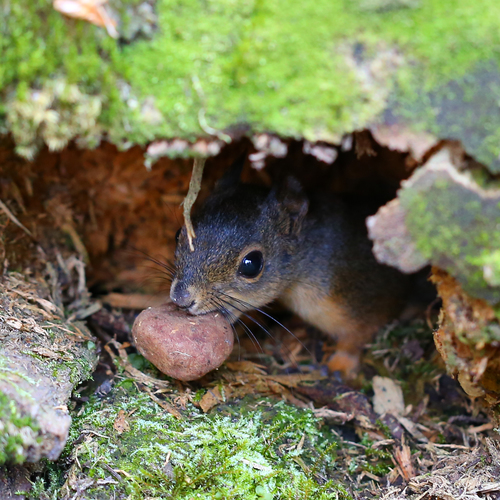
Rhizopogon occidentalis is an ectomycorrhizal mutualist that associates primarily with two- and three-needle pines, though it can also form ectomycorrhizal relationships with Sitka spruce. Studies and observations of its interactions with bishop pine show it is most competitive in newly forested areas or areas with recent disturbance such as fire, due to a strong priority effect, and is often outcompeted as forests mature. Its early establishment after fire may also be aided by the greater heat resistance of its spores compared to some cooccurring ectomycorrhizal species. Its fruiting bodies grow underground, are eaten by small mammals, and these mammals disperse the fungus's spores. After dispersal, spores can remain dormant for more than four years.