About Rhipidura nigritorquis Vigors, 1831
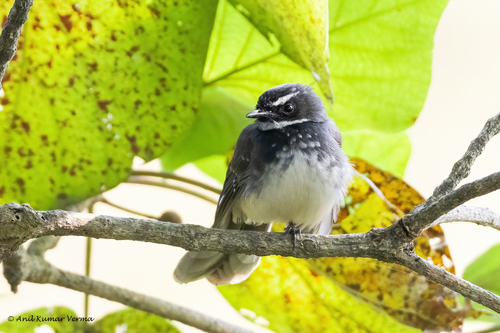
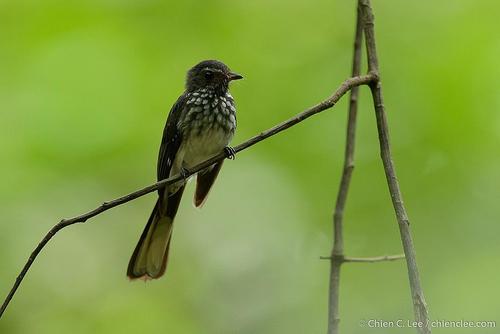
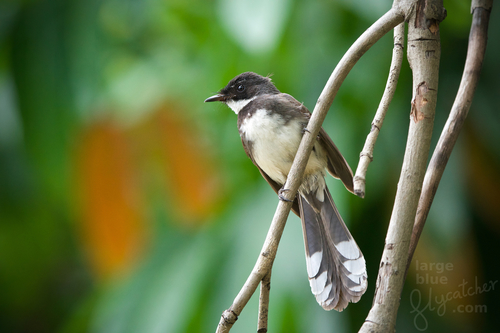
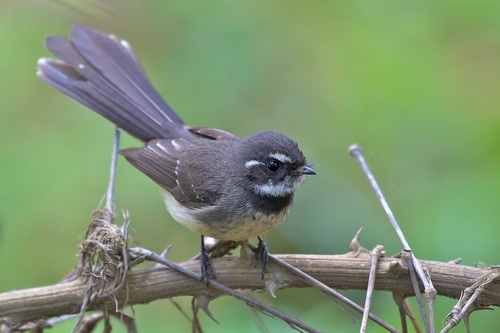
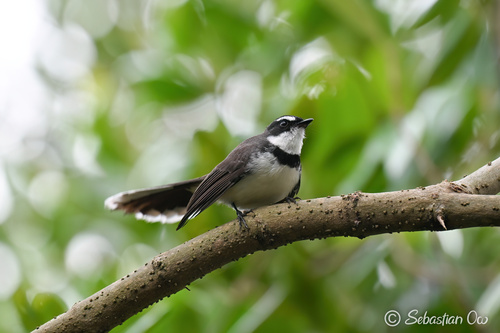
Rhipidura nigritorquis Vigors, 1831 is a moderately sized bird with a long tail. This species is commonly found in wooded areas and open spaces of lowland regions. Its upper body is sooty gray, and its underbody is white. It has a black chest band, a black face, and a distinct white throat and brow. It frequently moves its tail from side to side, showing off the tail's white tips. Its song is made up of varied, somewhat unmusical, scratchy whistled phrases. In the Philippines, it is also known by the common names Maria Capra, and tarerekoy in the Visayas region of the Philippines. It can be distinguished from the Oriental magpie-robin by its white belly, fully black tail, paler gray throat and breast in females, and smaller overall size, particularly of the bill and wings; it also differs considerably in vocalization. This species is extremely adaptable to a wide range of wooded and scrubby lowland habitats, including lowland forest, second growth, agricultural areas, scrub, beaches, and parks. The IUCN has classified this species as Least Concern, as it is common across its wide range, though the organization assesses its population as declining. This bird, commonly called the Philippine pied fantail, feeds on insects that it catches while in flight. It joins mixed-species flocks with other insectivorous birds, and sometimes follows large mammals to feed on insects the mammals disturb. It breeds between March and June, building a cup-shaped nest from grass, roots, and fibres lined with spider webs. Clutch size is usually 2 to 3 eggs. When breeding, it is very aggressive towards potential predators, and will dive at humans, cats, and dogs.