About Rhipidura albiscapa Gould, 1840
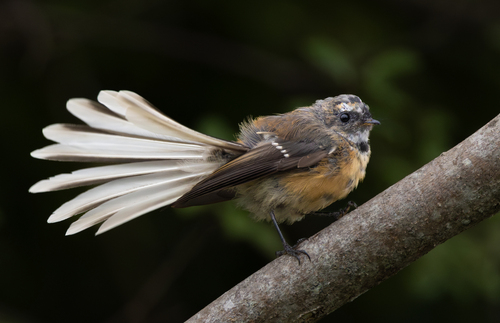
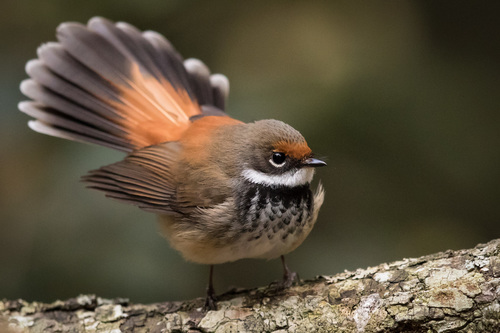
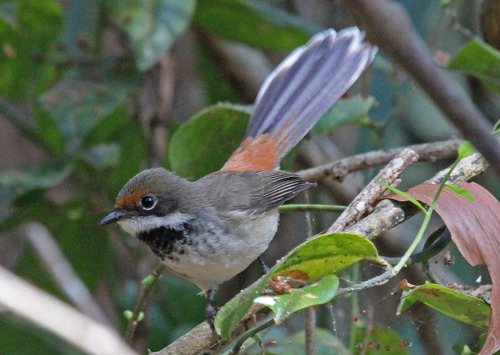
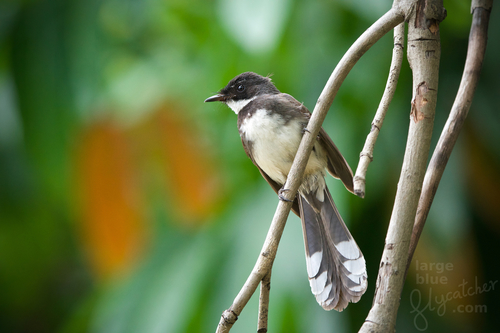
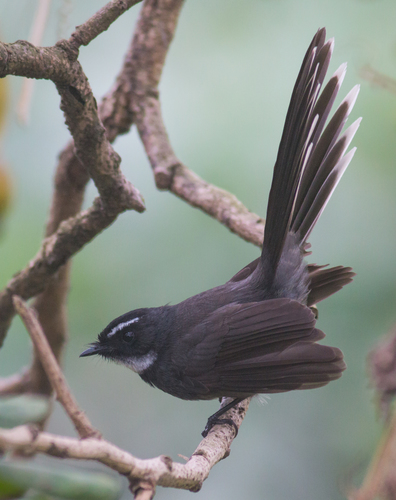
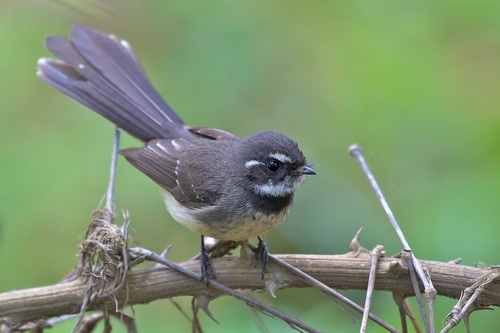
Rhipidura albiscapa Gould, 1840 is a bird species that is mid-to-dark grey or grey-brown on its upperparts, and lighter in color below, often with yellowish or orange tones. It has a white throat, white markings above the eye, and outer tail feathers that are either white-edged or entirely white, depending on the subspecies. This species reaches 16 cm (6.3 in) in total length, and half of this length is made up by the tail. As suggested by its genus name, the tail is often held fanned out, showing that the outer tail feathers are light and the central tail feathers are dark. Some subspecies, including keasti, have darker overall plumage. The species is commonly observed across a range of wooded habitats: eucalypt forest, rainforest, mangroves, and heath. This bird is almost constantly active during daylight hours. It flits from perch to perch, occasionally moving on the ground but mostly perching on tree twigs or other suitable perches, while searching for flying insects. It can catch flying insects through complex acrobatic chases. These birds are not shy, and will often move within a few meters of people, particularly in forested areas and suburban gardens. This behavior lets them catch small flying insects that have been disturbed by human activities like walking or digging. The species' call is an almost metallic cheek sound, produced as a single note or, more commonly, repeated in a chattering pattern. The Nullarbor Plain, a major biogeographical barrier in southern Australia, separates Rhipidura albiscapa populations, which have developed morphological divergence supporting subspecies differentiation. The east-west division created by this geographic barrier has led to the classification of R. albiscapa into five subspecies, distinguished by traits including call structure, plumage patterns, and nest construction. The five recognized subspecies and their ranges are: Rhipidura albiscapa keasti (eastern Australia), Rhipidura albiscapa albicauda (inland western Australia), Rhipidura albiscapa preissi (south western Australia), Rhipidura albiscapa alisteri (eastern Australia), and Rhipidura albiscapa albiscapa (Tasmania).