About Rhinostomus barbirostris (J.C.Fabricius, 1775)
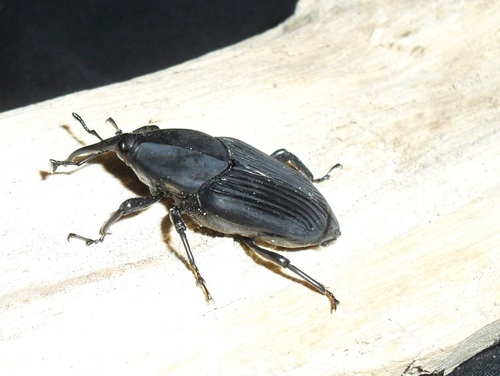
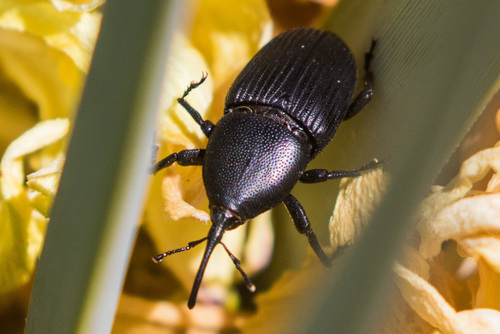
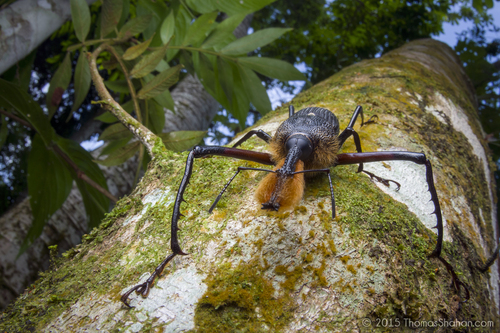
Rhinostomus barbirostris, first described by J.C.Fabricius in 1775, reaches a body length of 11–40 millimetres (0.43–1.57 in) when measured without the beak. It is considered likely the third largest weevil species in the world. Its basic body color is black. The pronotum is as long as it is wide, and it is densely covered in punctures. The elytra have distinct striae and feature deep punctures. Males of this species have a distinctive trait: long reddish gold hairs on the apical section of their rostrum, which is itself long, straight, and bears teeth along its dorsal side. The antennae are long, slender, and strongly elbowed. The inner face of the front tibiae has two or more large, sharp teeth. This species displays an unusual sexual polymorphism: in every population, some males are smaller than other males and closely resemble females. This is a common, widespread species found mainly in Central America and South America. Other similar species within the genus Rhinostomus occur in the United States, Africa, Madagascar, Borneo, and India.