About Rhinogobius candidianus (Regan, 1908)
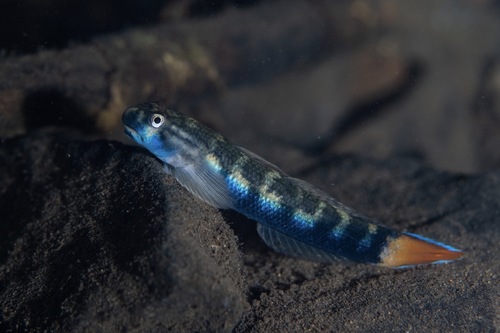
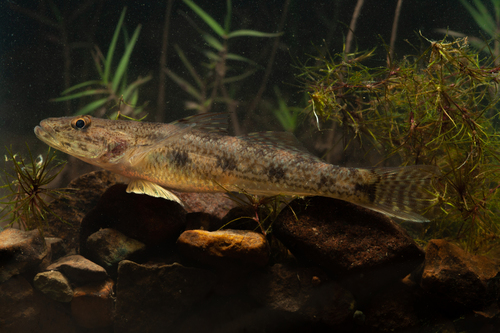
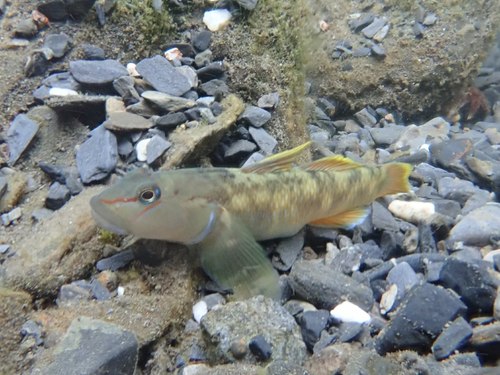
Rhinogobius candidianus can reach a standard length of 7.8 cm (3.1 in). It has an elongated body that becomes compressed toward the posterior end; its head is depressed, with an obtuse tip to its snout. Its pelvic fins are fused to form a rounded sucking disc. Body coloration ranges from yellow to dark brownish, with 6–7 indistinct blotches along the side, and some adult individuals also have blue spots. This goby is widely distributed across Taiwan; however, genetic analysis indicates that populations in the island’s eastern and southern regions are likely the result of human introductions. Genetic data also shows high levels of population differentiation between native populations, which suggests the species has a limited ability to disperse between separate watercourses via the sea. While some sources list this species as also occurring in China, there is currently no evidence to confirm this occurrence. Rhinogobius candidianus lives exclusively in lotic, or flowing freshwater, habitats. In the headwaters of Taiwan’s Tamsui River, it is most commonly found in microhabitats that feature large boulders and cobbles. It is an omnivorous species. One record notes it feeds primarily on filamentous algae, insects, and detritus; a separate study records its diet as consisting mainly of aquatic insects and macroinvertebrates, including freshwater crabs.