About Rhaphigaster nebulosa (Poda, 1761)
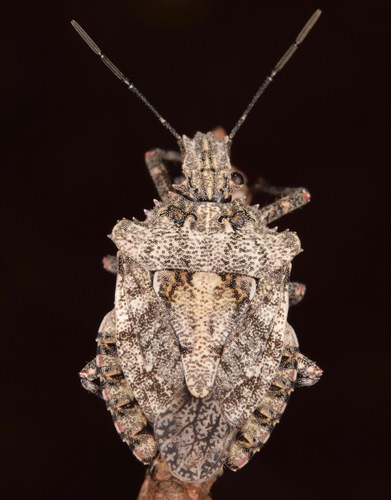
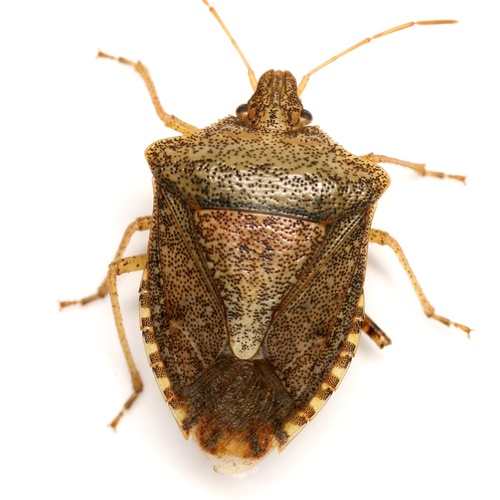
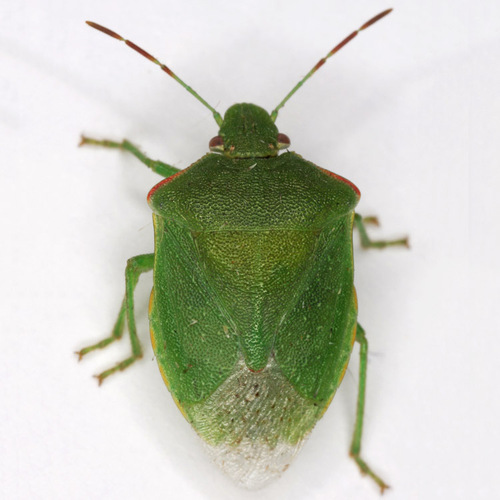
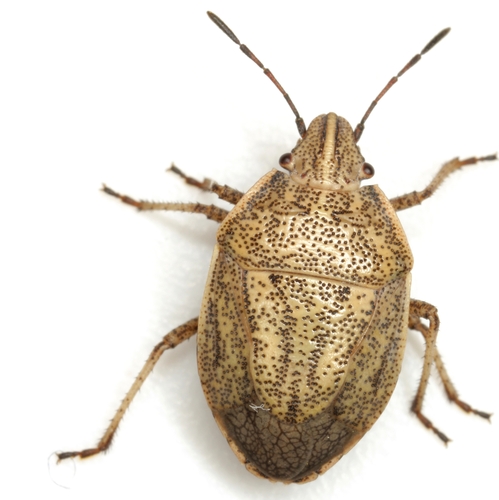
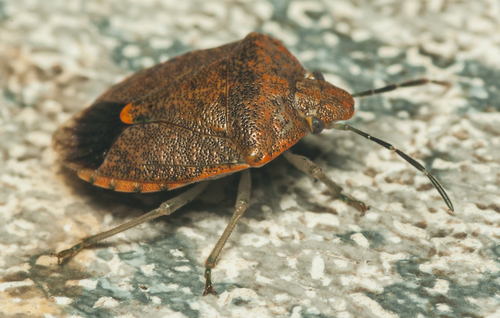
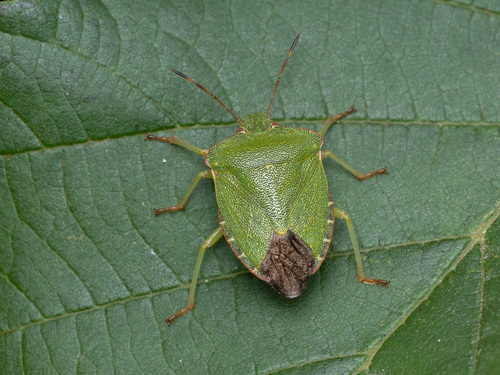
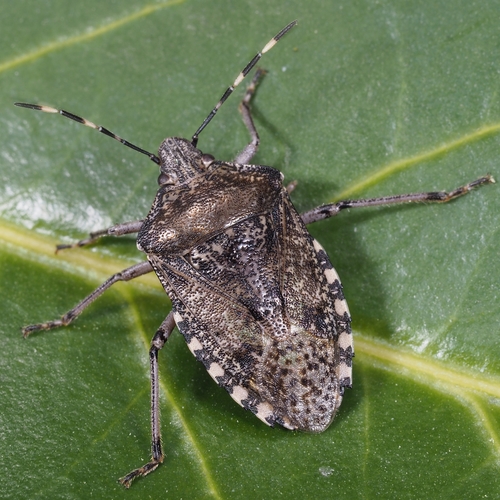
Rhaphigaster nebulosa (Poda, 1761), commonly called mottled shieldbug, adults reach a body length of 14–16 millimetres (0.55–0.63 in). These large shieldbugs are hairless, with body colour ranging from dirty yellowish-grey to brown. Irregularly distributed fovea cover the dorsal side of the body. The membrane of the forewings is often speckled with dark brown, and the extent of these speckles varies between individuals. The lateral abdominal edge (connexivum) bears black and yellow markings. Segments 3 through 5 of the antennae have alternating black and yellow ringed markings. The ventral side of the body is light in colour with scattered dark spots. On the underside, on the first abdominal sternite between the coxae, there is a long spur or spine. This species is visually similar to Dolycoris baccarum, but can be distinguished by its complete lack of hairs, while Dolycoris baccarum is hairy. It can also be confused with other species in the genus Rhaphigaster. In R. nebulosa, the ventral spur is long enough to reach at least the anterior margin of the procoxae; this spur is shorter in R. brevispina. The femurs, most noticeably the hind femurs, have a single isolated black spot on the anteroventral side of their apical half; this spot is absent in R. haraldi. The last tarsomere of each leg is mostly blackish, and the first and second tarsomeres sometimes have brown or black tips; in R. haraldi all tarsomeres are pale. This species occurs across the Palearctic region. It is more common in southern parts of Central Europe than in northern areas, with recorded presence in Austria, Croatia, France, Germany, Greece, Hungary, Italy, Luxembourg, Serbia, Slovenia, Spain, Switzerland, Turkey, and the United Kingdom. It is not known to be present in the United States. Mottled shieldbugs favour warm habitats including deciduous forests, parks, and gardens.