About Rhantus suturalis (W.S.MacLeay, 1825)
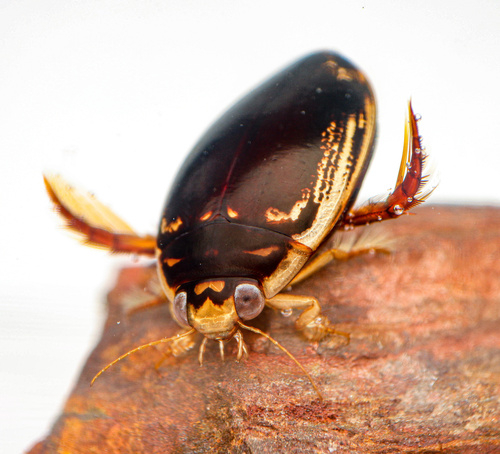
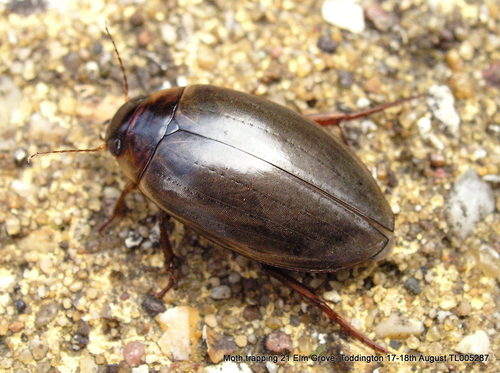
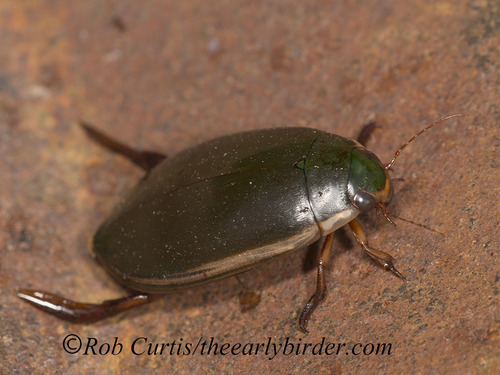
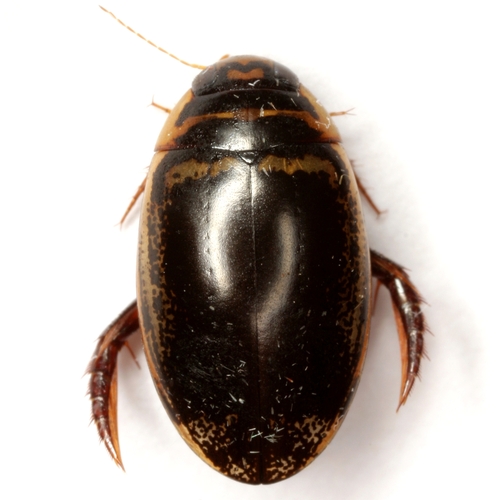
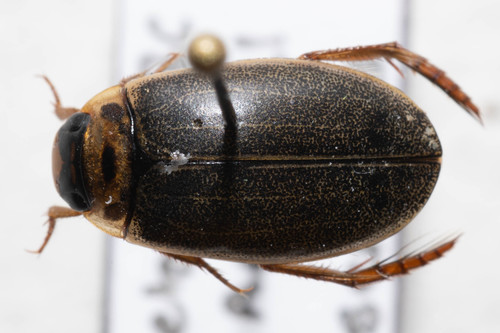
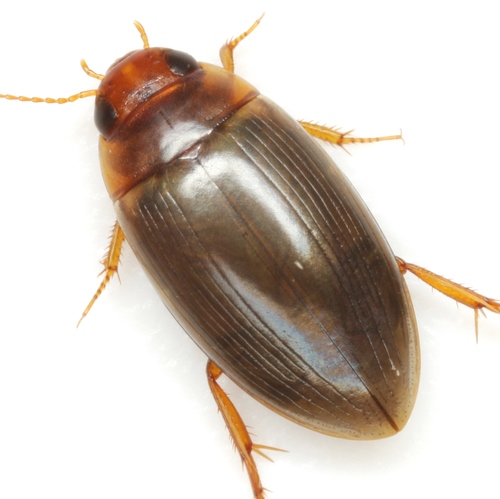
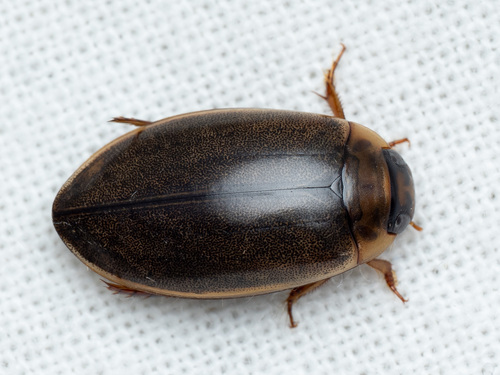
Adult Rhantus suturalis measure between 10.5 and 13.0 mm in length. Their head is black, with a pale front margin, a pale marking between the eyes, and pale antennae and palps. The pronotum is pale, and usually has a clearly defined dark marking in its center. The elytra are pale brown and covered with fine punctures. All abdominal sternites are solid black. The legs are brown, and the metatibiae and metatarsi are often darker in color. Males can be distinguished from females by weakly dilated basal tarsomeres on the prolegs and midlegs, and protarsal claws that are unequal in size and much shorter than the terminal tarsomere. In Europe, R. suturalis shares its range with the common related species R. exsoletus. Unlike R. suturalis, R. exsoletus has a faint black posterior margin on the pronotum instead of a central dark mark, and its abdominal sternites are yellow rather than black. In Australia, the only other known Rhantus species is R. simulans, which is larger (12.8 to 13.5 mm) and restricted to the country's southwest, while R. suturalis is more widespread across Australia. R. suturalis larvae follow the typical body form of Dytiscidae diving beetle larvae, with a flat head, crescent-shaped jaws, and a segmented body. The legs are partially fringed with hairs that the larvae use for swimming. A pair of setae-covered cerci is located at the tip of the abdomen. Fully mature larvae reach approximately 15 mm in length. Pupae are covered in stiff hairs. These hairs lift the pupa's body away from the mud inside the pupation cell, which may help prevent fungal infection and maintain fresh air around the pupa. Rhantus suturalis typically inhabits small water bodies with little to no aquatic vegetation. Common habitats include garden ponds, temporary pools, flooded vehicle tyre ruts, water butts, and brackish water ponds. Breeding takes place in spring and early summer, and eggs are laid among submerged debris. Larvae hatch a few days after eggs are deposited. The larval stage lasts three weeks and includes three larval instars. Late in the larval stage, larvae enter a temporary inactive period, then leave the water to dig a pupation cell where they pupate. The pupal stage itself may last only a few days, but newly developed adults remain inside the cell for additional time to develop full pigmentation and harden their exoskeletons. Adults emerge from the cell less than two weeks after the larva first dug the pupation cell. Adult R. suturalis can be found year-round. They are thought to overwinter underwater, and may remain active through the winter in milder climates.