About Rhanterium epapposum Oliv.
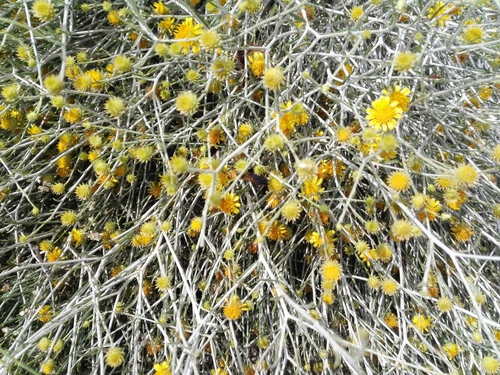
Rhanterium epapposum Oliv. is a bushy shrub in the Asteraceae plant family, native to the Arabian Peninsula’s deserts, including Kuwait, Saudi Arabia, and Qatar. Locally, it is known as arfaj in Arabic. This shrub grows to approximately 80 cm tall, with a complex network of branches scattered with small, narrow thorny leaves and bright yellow flowers that are around 1.5 cm wide. Its flower is the national flower of both Kuwait and Saudi Arabia. Rhanterium epapposum flowers from April to May, in late spring. It is counted among the main desert forage plants for camels and sheep. When cool temperatures occur, the plant grows new leaves quickly after rainfall. Within a few months, its new leaves and branches become vigorous, and the yellow flowers develop, attracting insects and birds. During summer, when the ground dries out, the plant sheds its leaves, leaving its branches naked and lignified, with living internal fibers. These structural changes help improve the plant’s chances of survival during stressful conditions: water and reserve materials are stored in the stems to keep the plant alive, supporting a small number of dormant buds. When growing conditions improve, stored reserves are moved to the buds to enable new growth. Arfaj produces abundant fruit, which forms in late spring and drops from branches once it matures. Fallen fruit accumulates under the shrub and remains dormant until conditions are favorable for germination. Each fruit holds around 6 to 8 seeds, which are dispersed by wind or water.