About Rhamphomyia longicauda Loew, 1861
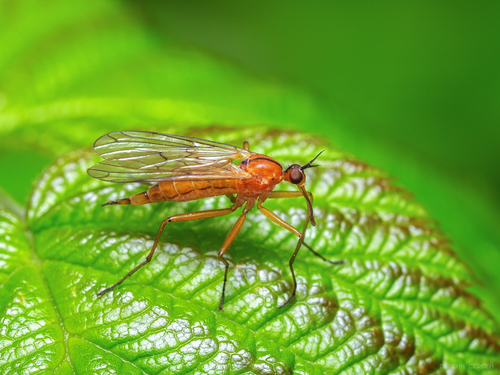
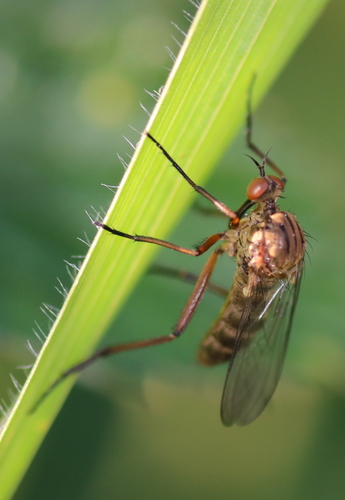
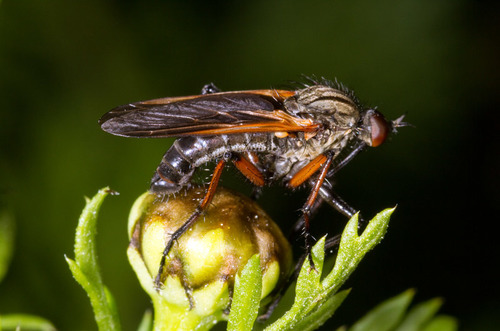
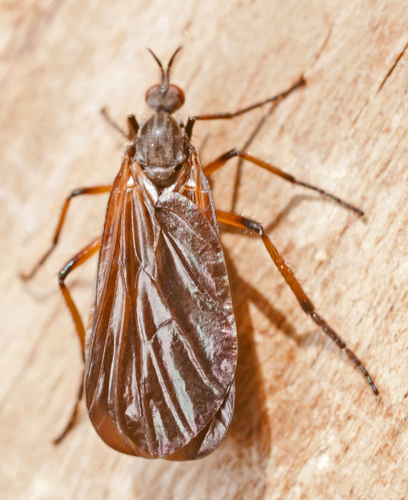
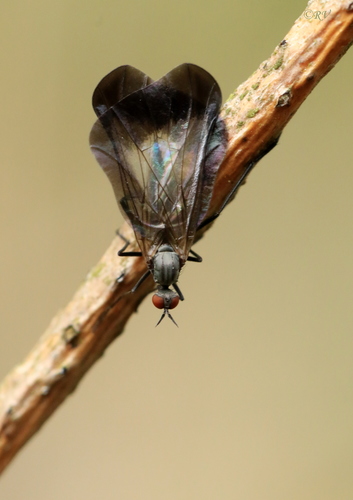
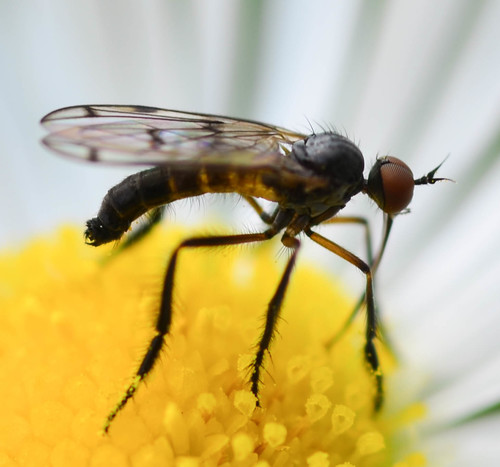
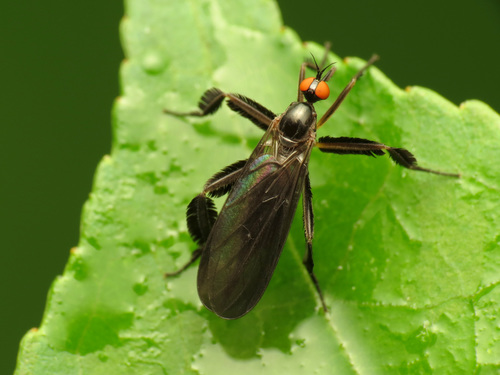
Rhamphomyia longicauda, commonly called the long-tailed dance fly, is a fly species in the family Empididae, superfamily Empidoidea, and subgenus Rhamphomyia. It is commonly found in eastern North America. This species is best known for having sex role reversal during courtship: females perform exaggerated displays and gather in leks to attract males. Female long-tailed dance flies cannot hunt for food, so they get all their protein from nuptial gifts provided by males. This female dependence on males for nutrition is the main cause of sex role reversal in this species. Males hunt for food starting one hour before sunset, within 30 meters of the lek site. They search for food by quickly moving through the area in a figure-8 flight pattern. Males eat any prey they can catch, but they typically capture swarming insects. Most prey of Rhamphomyia longicauda males are other flies (Diptera), which make up 70% of their total captured prey. Males also prey on mayflies (Ephemeroptera) and caddisflies (Trichoptera), and less frequently eat male ants, moths, and mosquitoes. One 5-year study found that captured prey sizes vary widely, ranging from 2 to 4.5 millimeters.