About Rhagonycha fulva (Scopoli, 1763)
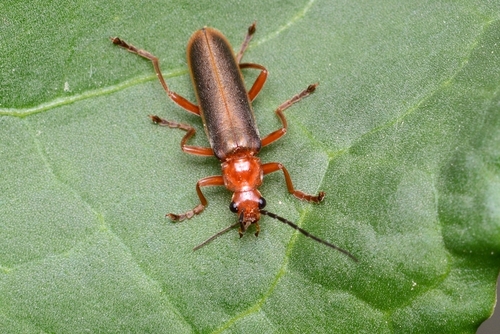
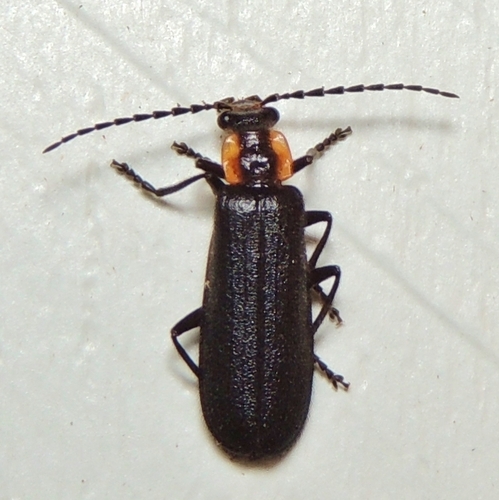
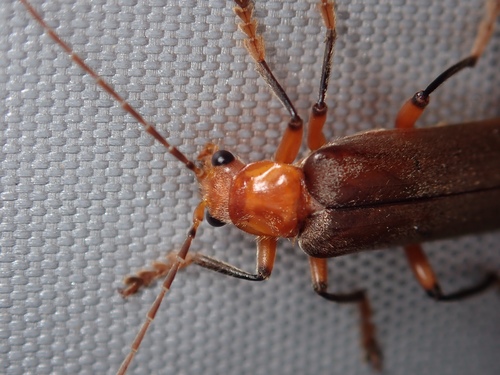
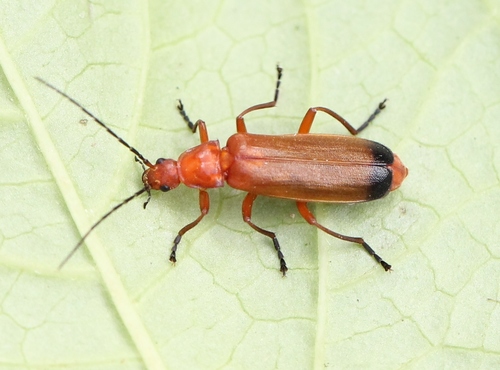
Rhagonycha fulva (Scopoli, 1763) is a species of soldier beetle that reaches 8–10 millimetres (0.31–0.39 in) in body length. Its antennae are black, though the first segment is occasionally orange. The head and pronotum are orange and shiny, with fine visible pubescence on the head. Pronotum shape varies between individuals, but it consistently narrows toward the head. The elytra cover the wings and most of the abdomen, and are dark shiny red; they end in a clearly visible black patch at the apical tip, which is one of the species' key identifying features. The femora and tibiae are orange, while the tarsi are black; the third segment of the tarsi is simple, not bilobed. All soldier beetles have soft bodies, which gives this species its German common name Roter Weichkäfer, meaning "red soft beetle". This beetle is very common across Europe and Anatolia. It has been introduced to North America, where it is well established in British Columbia and Quebec, and has been recently recorded in Ontario. In its life cycle, adult Rhagonycha fulva feed on aphids, as well as pollen and nectar. Larvae prey on ground-dwelling invertebrates including slugs and snails, and live at the base of long grasses. Adults are active between June and August, and spend much of their short lives mating, so they are often seen in pairs.