About Rhadinoceraea micans (Klug, 1816)
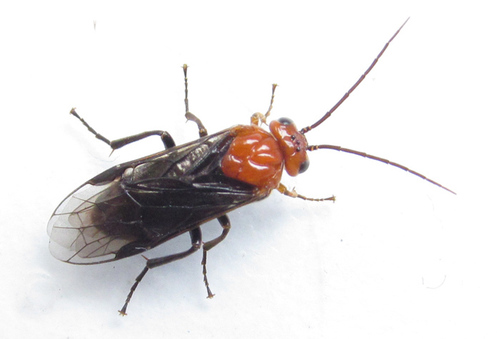
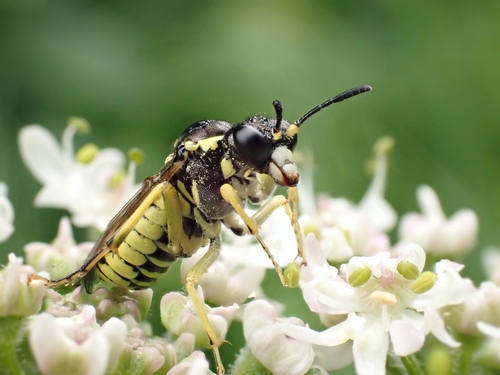
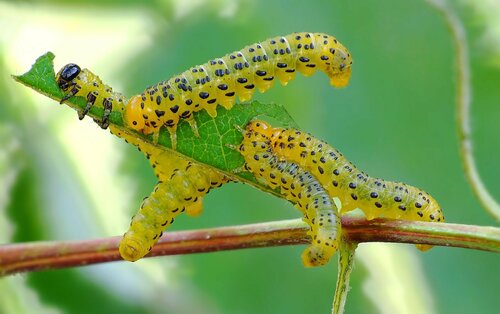
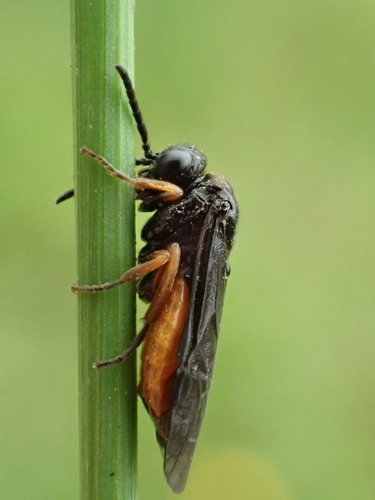
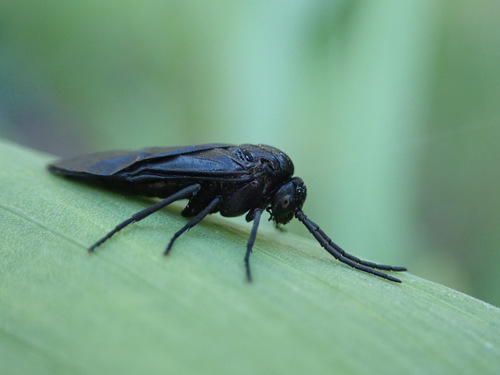
Rhadinoceraea micans, commonly known as the iris sawfly, is a sawfly species belonging to the family Tenthredinidae. This species is native to Europe, and its larvae are more frequently observed than the adult stage. When present in large numbers, larvae can cause damage to garden plants, including yellow iris (also called flag iris, Iris pseudacorus). The iris sawfly is endemic to Europe, with confirmed records in Britain, France, Sweden, Finland, Denmark, Netherlands, Germany, Poland, Italy, Bulgaria and Romania. It has not been recorded in Spain, Sicily, Mediterranean islands, Greece, former Yugoslavia, or any countries located east of Poland. Adult iris sawflies lay their eggs in May on the leaves of irises, particularly yellow flag irises. Eggs are deposited in large, flat clusters on iris leaves. Females lay eggs by using their ovipositor (referred to as a "saw") to insert eggs into the leaf blade, near the thickened central vein and not far from the base of the leaf. A single leaf may hold up to 19 eggs, each placed into a separate individual cell within the leaf tissue. Larvae feed on iris leaves until approximately July, after which they crawl down into the ground. Once in the soil, they spin cocoons and enter the pupal stage. They overwinter as pupae, and adult sawflies emerge in May of the following year. Adult iris sawflies are reluctant fliers, and will feign death when touched. The larvae are considered serious garden pests. They can completely defoliate irises that grow near water, especially yellow irises. Irises growing on dry ground are not attacked by this species.